
Principles of Therapy
Management of dermatophyte infections generally involves the use of topical or systemic antifungal agents. The choice between these options depends on factors (eg severity, location, and extent of the infection), the patient’s comorbidities, and their response to prior therapies.
The goals of therapy are relief of symptoms (eg pruritus), reducing the risk of secondary bacterial infection, and preventing the spread of the disease to other body sites or to other individuals.
Pharmacological therapy
Topical Antifungals
 Tinea Corporis, Cruris and Pedis_Management 1
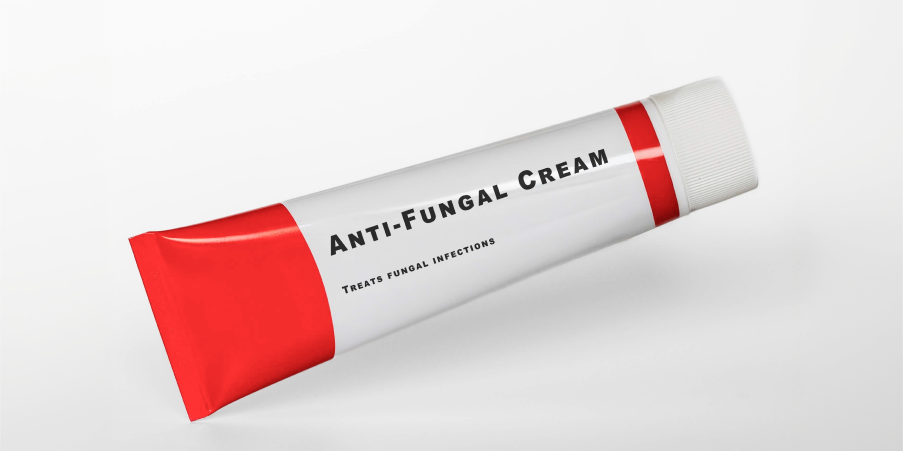
Most tinea corporis, cruris, and pedis infections can be treated topically. The choice of agent will depend on cost, physician, and patient preference. There are few direct comparison studies between agents of different groups. It is difficult to justify the choice of one agent over another.
For tinea pedis, treatment is targeted towards control of symptoms and spread to other parts of the body. Topical therapy is the preferred route of treatment. Topical keratolytics (eg Salicylic acid, Lactic acid and Urea) may be used in combination with antifungal treatment for hyperkeratotic tinea pedis.
Allylamines
Example drugs: Naftifine, Terbinafine
The action of allylamines is fungicidal in vitro. Allylamines may produce a faster response and be slightly more effective than azoles. Naftifine has anti-inflammatory properties.
Azoles
Example drugs: Bifonazole, Clotrimazole, Eberconazole, Econazole, Efinaconazole, Fluconazole, Itraconazole, Ketoconazole, Luliconazole, Miconazole, Oxiconazole, Sertaconazole, Sulconazole
Many imidazoles and triazoles are available, and these agents have broad-spectrum activity. Their actions are to bind to phospholipids in the fungal cell wall membrane, resulting in loss of essential intracellular elements, and are fungistatic in vitro. This typically results in a cure when treating tinea infections. Sertaconazole and Luliconazole possess potent anti-inflammatory effects comparable to antifungal-corticosteroid combinations. Efinaconazole is a treatment option for patients with co-existing tinea unguium infection.
Benzylamines
Butenafine is similar in structure to allylamines. The action is fungicidal in vitro. This has high cure rates and long disease-free intervals in treating interdigital tinea pedis.
Other Agents
Amorolfine
Amorolfine is an alternative treatment option for patients with tinea pedis. This is active against dermatophytes, dimorphic fungi, yeasts, and other filamentous and dematiaceous fungi.
Amphotericin B
Amphotericin B is a treatment option for various mucocutaneous fungal infections, including dermatophytosis, with minimal adverse events seen. This has broad-spectrum antifungal activity against most pathogenic fungi.
Ciclopirox
 Tinea Corporis, Cruris and Pedis_Management 2
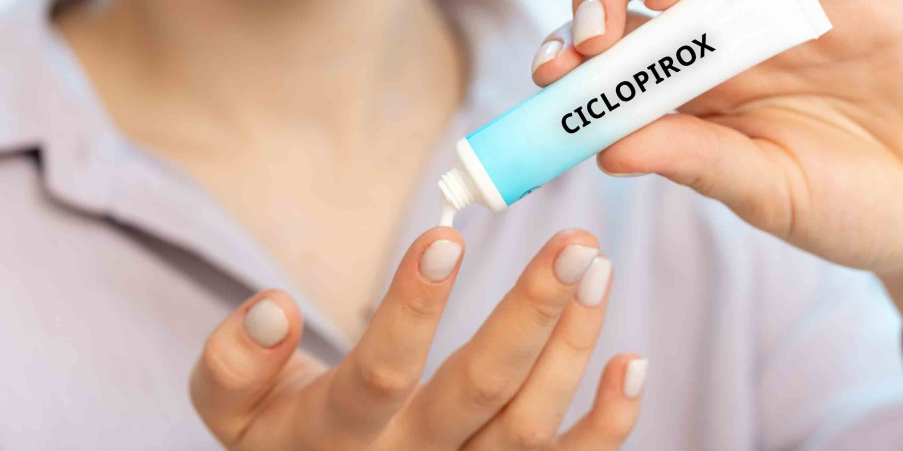
Ciclopirox has broad-spectrum coverage against dermatophytes, yeasts, and some bacteria.
Haloprogin
Haloprogin has an equivalent efficacy to Tolnaftate but has a broader fungal spectrum, including yeasts.
Tolnaftate
Tolnaftate is effective in most dermatophytoses and tinea versicolor but has narrow-spectrum antifungal activity and no antibacterial or anti-candidal activity.
Topical Corticosteroids1
Topical corticosteroids should only be used in combination with antifungals and limited only to confirmed fungal infections in patients suffering from symptomatic inflammation, itching, erythema, and burning sensation. These should only be used in the first few days of treatment. There is usually rapid symptomatic relief. Use with caution when treating areas of thin skin and naturally occluded body areas (eg groin, axillae, breast, and face). Combination topical corticosteroids with antifungals should not be administered in children <12 years of age.
1Topical antifungals combined with corticosteroids are available. Please see the latest MIMS for specific formulations and prescribing information.
Oral Antifungals
Example drugs: Fluconazole, Griseofulvin, Itraconazole, Terbinafine
Oral antifungals may be considered in patients with extensive disease, unresponsive to treatments, immunocompromised, or severe moccasin-type tinea of the plantar surface. The recommended dose of oral Terbinafine has been shown to produce sustained cure rates of 71-94%. Griseofulvin use resulted in a 27-35% cure rate. Oral Terbinafine or Itraconazole is generally recommended as the preferred firstline therapy.
Oral antifungals have been used to control acute vesicular tinea pedis. Pulse doses of Fluconazole, Itraconazole and Terbinafine have been shown effective. The use of Fluconazole in immunocompromised patients should be done sparingly. Observe caution in patients being treated with CYP3A4 substrates, HMG-CoA reductase inhibitors, and anticoagulants.
Optimal Vehicles of Topical Treatment
Creams
Creams are recommended for non-oozing and moderately scaling lesions.
Lotions
Lotions are easily spread on hairy areas. This is recommended for intertriginous areas or oozing lesions.
Ointments
 Tinea Corporis, Cruris and Pedis_Management 3
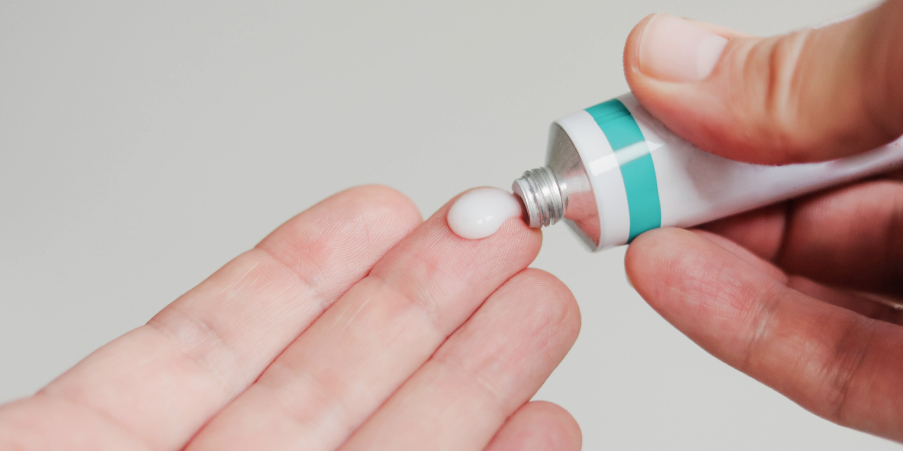
Ointments are useful for hyperkeratotic lesions.
Powders and Sprays
 Tinea Corporis, Cruris and Pedis_Management 4
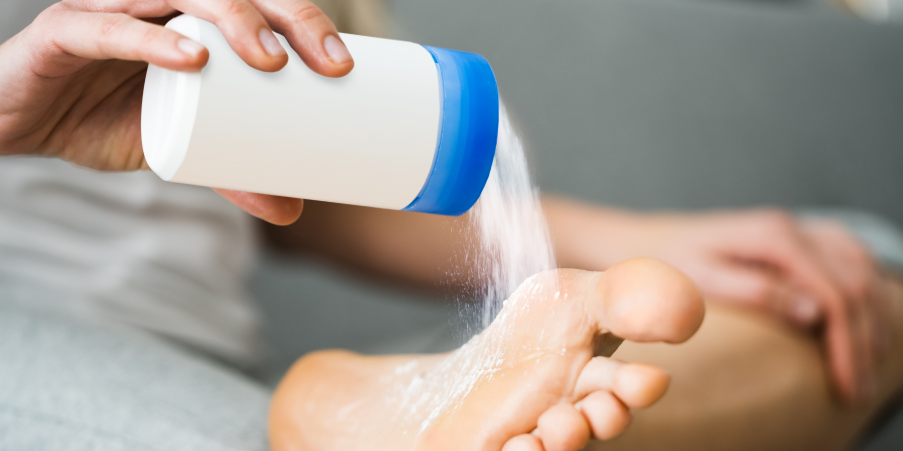
Powders and sprays may be used to prevent reinfection. This should be applied to the feet rather than to the shoes. This is typically not very effective in treating active infection.
Nonpharmacological
Patient Education
 Tinea Corporis, Cruris and Pedis_Management 5
Educate the patient about conditions and practices that promote fungal growth; fungi thrive in warm, moist environments. Use foot powders to avoid maceration. Antifungal powder may be applied inside shoes. Encourage the patient to wear loose-fitting garments, preferably made of cotton or synthetic materials that are made to wick away moisture from the skin surface. Socks should have the same type of properties. Make sure areas that are likely to become infected are dried completely before covering with clothes. Avoid walking barefoot, sharing garments, and wearing occlusive footwear.