
Overview
Acute uncomplicated
urinary tract infection (UTI) is one of the most common bacterial infections in
adults that may involve the lower and/or upper urinary tract, as stated in the Introduction section.
Urinary tract infection is among the most
common bacterial infections, especially in women. A detailed discussion about
the prevalence of urinary tract infection is in the Epidemiology section.
Bacteria is the most
common cause of urinary tract infection, with Escherichia coli constituting
approximately 70–95% of cases. Discussion on these pathogens is in the Etiology section.
The Pathophysiology section
states that the most common route of urinary tract infection is the ascending
spread of bacteria from the urethra to the bladder. The developmental process
of urinary tract infection in infected patients is in this section.
Conditions associated with
the development of urinary tract infection are in the Risk Factors section.
The Classification section
enumerates the urinary tract infection categories based on the 2025 European
Association of Urology (EAU) guidelines.
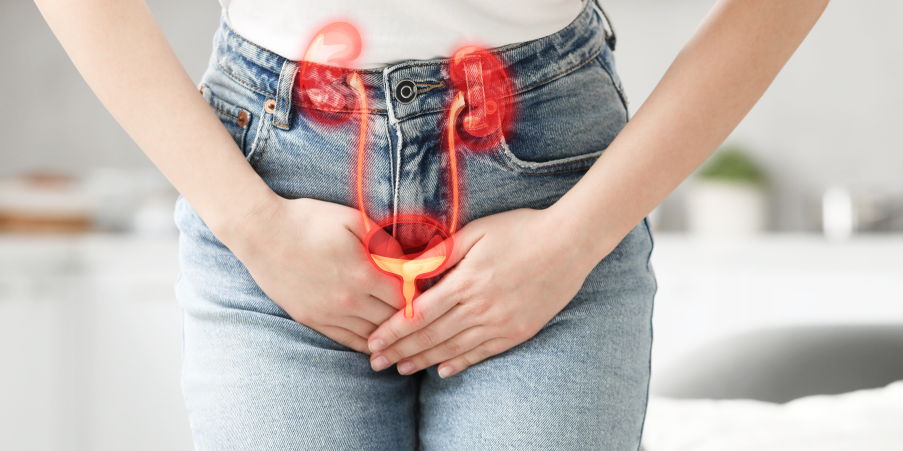 Urinary Tract Infection - Uncomplicated_Disease Summary
History and Physical Examination
The Clinical
Presentation section
describes the clinical features suggestive of acute uncomplicated cystitis and
acute uncomplicated pyelonephritis.
The History section
and the Physical Examination section enumerate important symptoms and
examination findings to note in the evaluation of patients suspected of urinary
tract infection.
Diagnosis
Discussions on the
different diagnostic studies such as urinalysis, urine dipstick, and culture are
in the Laboratory Tests and Ancillaries
section.
The Imaging section discusses the diagnostic tests and
indications for imaging in patients with suspected urinary tract infections.
Other conditions that should be ruled out in
the diagnosis of acute uncomplicated urinary tract infection are listed in the Differential Diagnosis section.
Management
Indications for
hospital admission in acute uncomplicated urinary tract infections are
enumerated in the Evaluation
section.
General therapy
principles in the management of uncomplicated urinary tract infection are in
the Principles of Therapy
section.
The Pharmacological
Therapy section discusses the
therapeutic options in patients diagnosed with acute uncomplicated cystitis,
acute uncomplicated pyelonephritis, and recurrent urinary tract infection.
The Nonpharmacological
section includes antibiotic-sparing treatment and prevention options in acute
uncomplicated cystitis and behavioral modification in recurrent urinary tract
infection.
The Monitoring section identifies indications
for follow-up in acute uncomplicated cystitis and acute uncomplicated
pyelonephritis.
Discussion about
complicated urinary tract infection is in the Complications
section.


