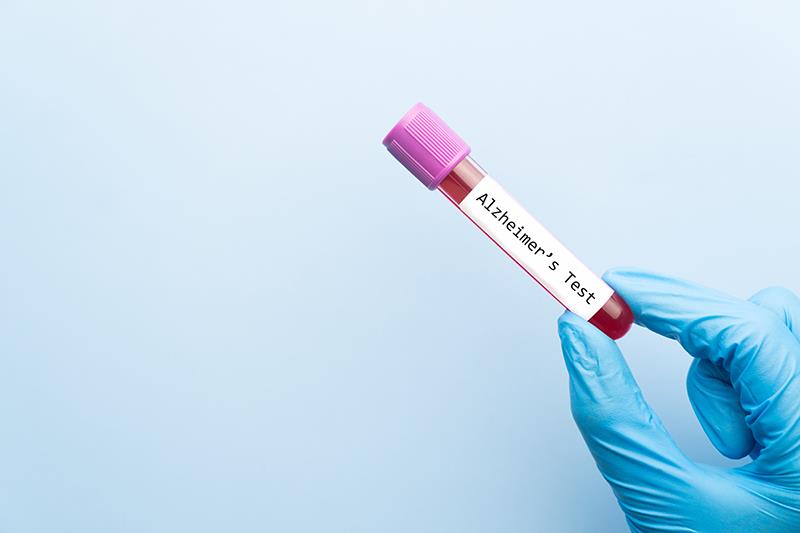
A blood-based biomarker (BBM) test for Alzheimer’s disease (AD) allows primary care physicians to diagnose AD with the same precision as specialists, suggests a study presented at AAIC 2026.
Access to this high-performing blood test also improves the accuracy of AD diagnosis, effecting significant changes in clinical management in both primary and secondary care.
“Primary care physicians appear more confident using BBM tests to rule out AD, whereas dementia experts also use them to support an AD diagnosis,” said lead study author Dr Sebastian Palmqvist, neurologist and associate professor at Lund University, Sweden.
A total of 1,310 patients with mild cognitive impairment or dementia were included in the analysis. Of these, 383 were in primary care and 927 in secondary care.
Among primary care patients, head-to-head comparisons showed higher diagnostic accuracy by dementia experts than by primary care physicians before blood test disclosure (76 percent vs 65 percent; p=0.003). However, no between-group difference was noted after disclosure (94 percent vs 93 percent; p=0.83). [AAIC 2026, abstract 6718]
Diagnosis change
Primary care physicians changed their diagnoses in nearly a third of patients (30.0 percent) after seeing the test results, with an accuracy for AD detection increasing from 65 percent to 93 percent (p<0.001).
In BBM-positive results, no increase occurred in the readiness to make an immediate clinical diagnosis, but BBM-negative cases showed an increase from 12.9 percent to 25.0 percent; p=0.002). Changes in clinical management also transpired in 55.9 percent (p<0.001 vs prespecified threshold).
Among patients receiving secondary care, dementia experts changed their diagnosis in about one in five patients (21.6 percent) after blood test disclosure, with the accuracy for AD diagnosis improving from 0.8 percent before to 11.5 percent after disclosure in BBM-negative results and from 1.9 percent to 55.4 percent in BBM-positive cases (p<0.001 for both).
Test disclosures prompted changes in clinical management in nearly half (49.2 percent) of the patients. This exceeded the prespecified threshold of 30 percent (p<0.001).
“A negative result helped primary care physicians confidently rule out Alzheimer’s and look for other causes of the symptoms,” Palmqvist said in a press statement. [https://aaic.alz.org/downloads2026/Bloodbiomarkers.pdf]
“It’s important to remember that these blood tests are designed specifically to detect Alzheimer’s, so patients with negative results may still have other neurological conditions and may still be suitable for referral to a specialist for further evaluation,” he added.
Study details
This real-world study involved a prospective analysis of plasma using the PrecivityAD2 algorithm (%p-tau217 and Aβ42/40 ratios). A two-cutoff model was also applied, classifying blood test results as negative, intermediate, or positive. Participating physicians (n=165) completed questionnaires before and after BBM test disclosures.
A consensus clinical AD diagnosis based on clinical assessment and CSF Aβ42/40 or Aβ-PET, with adjudication blinded to BBM results, served as the primary outcome. Palmqvist and colleagues assessed changes in clinical management as a composite endpoint (ie, referrals, examinations, etc.).
“We wanted to find out whether a simple blood test for Alzheimer’s changes how doctors actually diagnose and manage their patients in everyday clinical care,” said Palmqvist.
“Accurate Alzheimer’s diagnosis has largely been limited to specialist settings. Our findings show that this blood test could bring that level of accuracy into primary care, where most patients are first seen, closing the gap between primary care and specialty care,” he added.