
Laboratory Tests and Ancillaries
Microscopy
 Tinea Corporis, Cruris and Pedis_Diagnostics
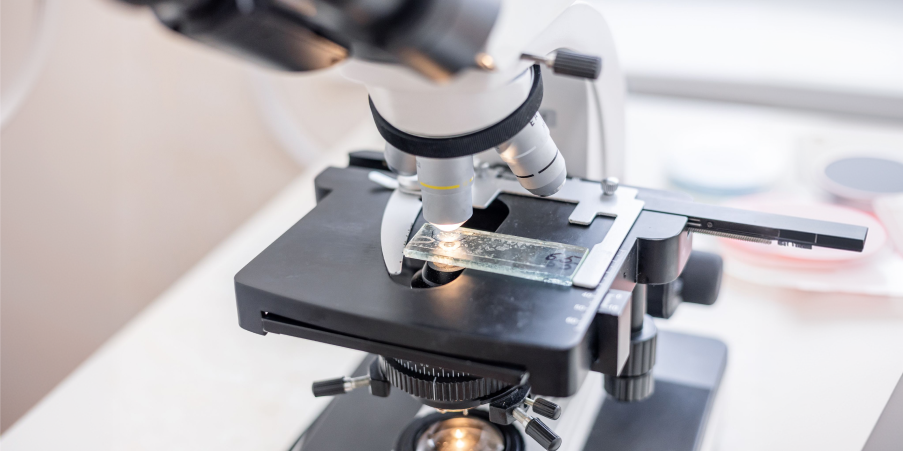
Microscopy provides the most rapid means of diagnosis but may not always be positive in affected patients. Scales, hairs, or debris are mounted in a 10-20% Potassium hydroxide (KOH) solution and viewed under a light microscope.
Positive Microscopy
Hyphae (branching, rod-shaped filaments of equal width with lines of separation) and arthrospores will be visible.
Reflectance Confocal Microscopy
Reflectance confocal microscopy is a noninvasive, real-time imaging of the superficial layers of the skin. This may be used as a tool for the diagnosis of tinea corporis and tinea pedis.
Culture
Culture is slow and expensive, and results may take up to 4 weeks. This is rarely indicated for diagnosis of tinea pedis, corporis, or cruris. The results may be positive even when microscopy is negative. This allows accurate identification of organisms. Culture studies are necessary for hair and nail fungal infections, infections unresponsive to regular topical treatment, unclear diagnoses, or when considering long-term oral therapy. Antifungal susceptibility testing of cultured isolates can help identify the most effective treatment option. This is particularly valuable in cases that do not respond to initial therapy, as it supports the selection of the most appropriate antifungal agent.
Polymerase Chain Reaction (PCR)
Polymerase chain reaction is increasingly recognized as a valuable tool in the diagnosis of dermatophytosis.