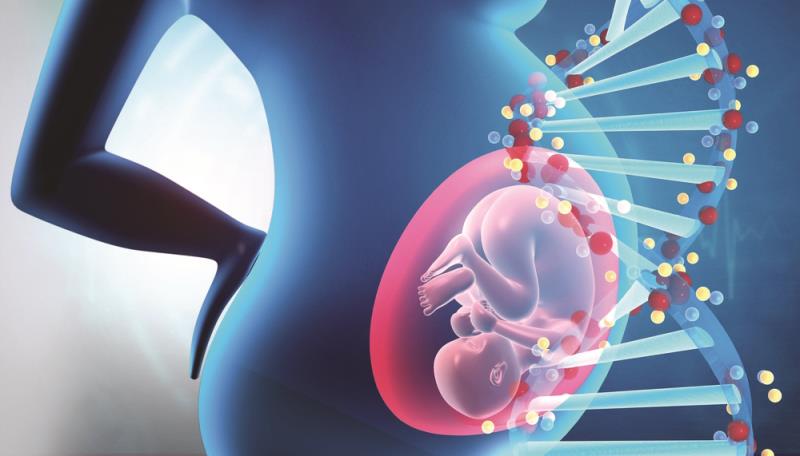
Epigenetic patterns present at birth may shape how an infant’s gut microbiome develops in the first year of life, and both are associated with autism spectrum disorder (ASD) and attention-deficit/hyperactivity disorder (ADHD) traits at the age of 3 years, researchers at the Chinese University of Hong Kong (CUHK) found.
The researchers analyzed 571 cord blood methylomes and 5,328 gut metagenomes from infants and their parents across 969 families from the MOMmy (MOther-infant Microbiota transmission and its link to long-terM health of babY) cohort, a prospective birth cohort in Hong Kong. This is the first longitudinal study analyzing multiple sample types to depict the interaction between perinatal exposures, epigenetic hallmarks, and gut microbiome development and neurodevelopment within the first 3 years of life. [Cell Press Blue 2026;doi: 10.1016/j.cpblue.2026.100009]
The epigenome of infants at birth was found to be associated with delivery mode, gestational age, time of birth (during COVID-19 waves), having older siblings and maternal allergy, while microbiome development was linked to delivery mode, intrapartum antibiotic exposure, having older siblings, breastfeeding and birth during the COVD-19 pandemic.
Notably, Caesarean section (CS) delivery was found to be associated with delayed maturation of infant gut microbiota and increased abundance of opportunistic pathogens (eg, Staphylococcus epidermidis at birth, and Clostridium perfringens and Enterococcus faecium across 2, 6 and 12 months of age). CS delivery also reduced vertical maternal microbiome transmission, which was partially compensated by paternal microbiome.
Children with hypermethylated genes involved in neurogenic and neurotransmission pathways in cord blood showed higher ASD and ADHD scores at 3 years of age. CS delivery was also associated with differential methylation of genes involved in immune responses and neural development. However, these epigenetic effects were mitigated by early colonization of Lachnospira pectinoschiza in ASD and Parabacteroides distasonis in ADHD. Nevertheless, the authors noted that the potential impact of CS-related epigenetic alterations on risks of neurodevelopment outcomes warrants long-term follow-up and further study.
“Certain bacteria seem to offer protection, which is exciting because it suggests possible ways to support a child’s development through diet or probiotics in the future,” said senior author Professor Francis Ka-Leung Chan of Microbiota I-Center (MagIC) and the Centre for Gut Microbiota Research at CUHK.
“The findings point to a ‘conversation’ between a baby’s epigenetic setting at birth and early gut microbial colonization, where the presence of certain ‘good’ bacteria can modify the risk of neurodevelopmental disorders, while emphasizing that neurodevelopmental conditions are complex and should not be assumed to be ‘fixed at birth’,” added co-senior author Professor Hein-Min Tun of MagIC.
“The ultimate goal is to develop safe, nonintrusive early interventions such as specific probiotics or live biotherapeutics that can help nurture a healthy gut microbiome and potentially reduce the risk of neurodevelopmental challenges,” concluded first author of the study, Professor Siew-Chien Ng of MagIC.