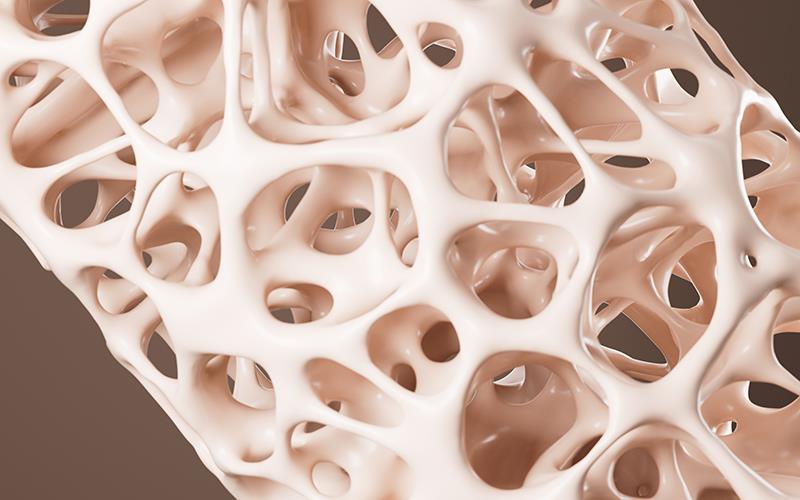
Pulse intravenous methylprednisolone does not induce short-term loss of lumbar spine or hip bone mineral density (BMD), reports a Singapore study. However, it does suppress bone turnover markers, suggesting early effects on bone remodelling that are not captured by BMD alone.
“Although pulse regimens may be less detrimental to BMD than chronic daily glucocorticoid (GC) exposure, current evidence is insufficient to conclude that fracture risk is negligible, particularly among high-risk patients or those receiving repeated or high cumulative doses,” the investigators said.
In this meta-analysis, the databases of PubMed, Scopus, Embase, and Google Scholar were searched up to September 2025. The investigators included longitudinal cohort and case-control studies with appropriate comparators and randomized controlled trials reporting pre- and postintravenous methylprednisolone bone outcomes.
Eight studies involving a total of 192 participants (72 percent female) met the eligibility criteria. [Ann Acad Med Singap 2026;55:240-251]
Over a mean follow-up of 5.5 months, intermittent high-dose intravenous pulse methylprednisolone therapy did not result in significant BMD reductions at the lumbar spine (mean difference [MD], 0.01 g/cm2, 95 percent confidence interval [CI], ‒0.02 to 0.03), femoral neck (MD, ‒0.01 g/cm2, 95 percent CI, ‒0.03 to 0.01), or total hip (MD, ‒0.03 g/cm2, 95 percent CI, ‒0.06 to 0.01).
No significant change was noted for trabecular bone score (MD, 0.01 g/cm2).
On the other hand, significant reductions were observed for procollagen type-1 N-terminal propeptide (MD, ‒36.95 ng/mL, 95 percent CI, ‒56.86 to ‒17.03) and C-terminal telopeptide (MD, ‒0.19 ng/dL, 95 percent CI, ‒0.32 to ‒0.07). Moreover, serum 25-hydroxyvitamin D showed a modest increase, while serum calcium and parathyroid hormone remained unchanged.
“From a clinical perspective, preservation of short-term BMD should not be equated with skeletal safety,” the investigators said. “[B]aseline fracture risk assessment remains important, and clinicians should not rely on BMD alone when evaluating patients receiving pulse intravenous methylprednisolone.”
Changes in BMD
These findings reveal how pulse intravenous methylprednisolone yields early detectable changes in bone remodelling that precede changes in BMD.
Such effect differs with chronic GC therapy, which causes rapid changes in BMD within 3 months of initiation, predisposing early fracture risk. [N Engl J Med 2011;365:62-70; Lancet Diabetes Endocrinol 2025;13:964-979]
“GCs suppress bone formation primarily by inhibiting osteoblast differentiation and activity, in part through inhibition of the Wnt signalling pathway,” the investigators said. [Front Endocrinol (Lausanne) 2022;13:835720]
Furthermore, GCs increase the expression of Dickkopf-1 and sclerostin, reduce the proliferation of osteoprogenitor cells, and stimulate the differentiation of mesenchymal stem cells into adipocytes instead of osteoblasts. [Lancet Diabetes Endocrinol 2025;13:964-979]
“These effects result in a sustained reduction in osteogenesis,” said the investigators.
“Future well-designed controlled studies should directly compare pulse and chronic regimens with standardized timing of turnover marker sampling, incorporate bone quality assessments such as trabecular bone score at peripheral skeletal sites such as the radius, and include fracture and fall outcomes,” they added.
Chronic exposure to GCs leads to secondary osteoporosis and fractures, according to the investigators.