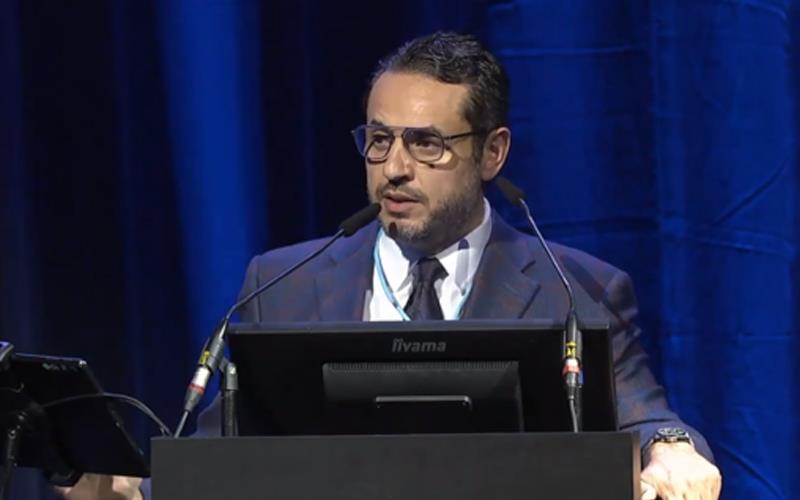
Treatment with pemvidutide, an investigational balanced 1:1 glucagon/GLP-1 dual receptor agonist, led to significant improvements in primary noninvasive tests (NITs), such as Enhanced Liver Fibrosis (ELF) and Liver Stiffness Measurement (LSM), and weight loss in patients with metabolic dysfunction-associated steatohepatitis (MASH), according to the phase IIb IMPACT trial presented at EASL 2026.
“MASH therapies that can address both liver disease and its underlying metabolic drivers are urgently needed to improve patient outcomes,” said principal investigator Prof Mazen Noureddin from Houston Methodist Hospital, Houston, Texas, US, in a press release.
“These 48-week IMPACT trial findings are particularly compelling because they demonstrate meaningful reductions in liver fat and fibrosis biomarkers and in lipids elevated at baseline, alongside improvements in weight and other cardiometabolic risk factors. In patients with MASH, where cardiovascular disease remains a leading cause of mortality, seeing this type of broad metabolic impact is highly relevant to overall patient outcomes,” he noted.
IMPACT enrolled 212 patients (mean age 53 years, 58 percent female) with biopsy-confirmed MASH and fibrosis stages F2 or F3. Participants were randomized to receive once-weekly subcutaneous pemvidutide at 1.2 (n=41) or 1.8 mg (n=85), without dose titration, or placebo (n=86).
At 48 weeks, patients who received pemvidutide 1.2 or 1.8 mg had significant improvements in ELF (least squares [LS] mean change from baseline, -0.49 and -0.58, respectively, vs 0.16; p<0.0001 for both doses) and LSM (LS mean change from baseline, -3.04 and -3.97 vs -0.03 kPa; p<0.05 and p<0.001) compared with placebo. [EASL 2026, abstract 3470]
A significantly higher proportion of pemvidutide-treated patients also achieved a ≥0.5 reduction in ELF and a 30-percent reduction in LSM, with 27.8 percent in the low-dose group (p<0.001) and 32.4 percent in the high-dose group (p<0.0001), compared with 3.2 percent of placebo-treated patients.
Patients receiving pemvidutide also expereinced statistically significant decreases in key noninvasive markers of liver health and hepatic inflammation, such as liver fat content, alanine aminotransferase (ALT), and corrected T1 (cT1).
From baseline to week 48, liver fat content dropped by 45.2 percent and 54.7 percent in the 1.2- and 1.8-mg pemvidutide groups, respectively, compared with 8.2 percent in the placebo group. Noureddin said that a ≥30-percent reduction in liver fat was associated with MASH resolution.
ALT levels markedly dropped to 37.8 and 37.4 IU/L in the 1.2- and 1.8-mg pemvidutide groups, respectively, but only to 10.3 IU/L in the placebo group (p<0.0001 for both). Accordingly, more patients achieved ALT normalization (<30 IU/L) at week 48 with pemvidutide than with placebo (73.7 percent [1.2 mg] and 72 percent [1.8 mg] vs 40 percent; p<0.0001 for both).
Regarding the MRI-derived marker of liver disease activity, cT1 decreased signifcantly with pemvidutide vs placebo (-124 [1.2 mg] and -140 [1.8 mg] vs -21 ms; p<0.0001 for both).
Taken together, Noureddin stated that reductions of 17 IU/L in ALT and ≥80 ms in cT1 were associated with a high probability of histological response in MASH patients.
With regard to metabolic biomarkers, patients with elevated baseline lipids who received pemvidutide 1.2 or 1.8 mg experienced greater reductions in triglycerides (-16.9 percent and -23.7 percent, respectively, vs -3.3 percent), total cholesterol (-15.5 percent and -15.4 percent vs -5.1 percent), and low-density lipoprotein cholesterol (-16.5 percent and -19.7 percent vs -10.3 percent) at week 48 than those on placebo.
Additionally, patients receiving pemvidutide achieved a significant weight loss of 4.5 percent in the low-dose group and 7.5 percent in the high-dose group compared with 0.2 percent of those receiving placebo (p=0.0001 for both).
In terms of safety, neither of the pemvidutide group had serious adverse events (AEs) related to the study drug. Gastrointestinal (GI) AEs were mild to moderate in severity, and only about 1 percent of pemvidutide-treated patients discontinued treatment due to GI side effects.
Overall, pemvidutide demonstrated statistically significant and early improvements in MASH, along with weight loss, with a generally favourable tolerability profile without the need for dose titration, Noureddin said.
He also mentioned that the “efficacy and safety of pemvidutide in MASH patients will be further assessed in a phase III clinical trial.”