Toripalimab plus gemcitabine-cisplatin shows promise as neoadjuvant treatment in MIBC
14 hours ago
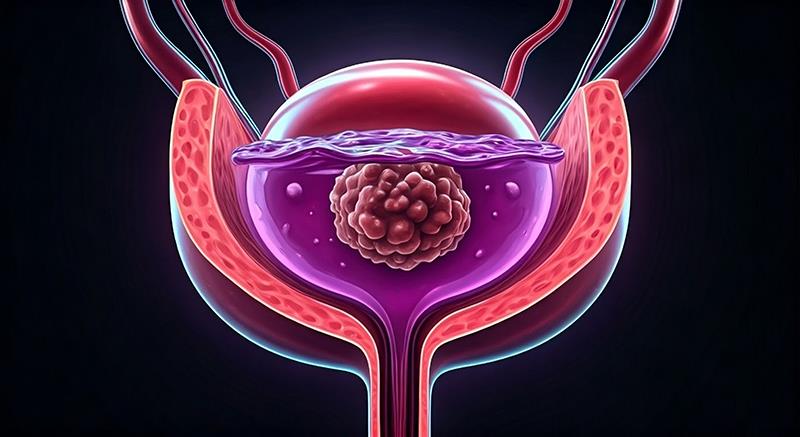
Combining toripalimab with gemcitabine and cisplatin chemotherapy is safe and efficacious in patients with muscle-invasive bladder cancer (MIBC), demonstrating its potential as a neoadjuvant treatment (NAT) in a phase II clinical trial.
Twenty-seven patients underwent radical cystectomy following NAT from January 2020 to December 2021, with three participants withdrawing from the study. The rate of pathological complete response (pCR) was 40.7 percent (11 out of 27).
Progression-free survival was 85.2 percent at 1 year and 77.6 percent at 3 years, while the overall survival rates were 96.2 percent and 84.6 percent, respectively.
Eighteen patients retained the target lesions during NAT, of whom five (27.8 percent) showed a pCR and nine (50.0 percent) a pathological response. Serious adverse events occurred in 13.3 percent of patients.
In biomarker analysis, pCR rate after NAT was lower among patients with dual mutations in KMT2D, ERBB2, or EPHA2 genes. In patients with PD-L1 expression ≥5 percent, the pCR rate was 43.8 percent, and the pathological response rate was 68.8 percent. In those with PD-L1 expression <5 percent, the pCR and the pathological response rates were 36.4 percent and 63.6 percent, respectively.
Thirty patients with T2-3N0M0 MIBC scheduled for radical cystectomy were enrolled in this phase II study. They received toripalimab 240 mg, gemcitabine 1,000 mg/m2, and cisplatin 70 mg/m2 on day 1, followed by gemcitabine 1,000 mg/m2 on day 8, in 21-day cycles for a total of four cycles. Radical cystectomy was scheduled 4 to 6 weeks after the last treatment cycle.
The authors performed the Fisher exact test to analyse the association between genomic changes, tumour mutation burden, and pCR rate.