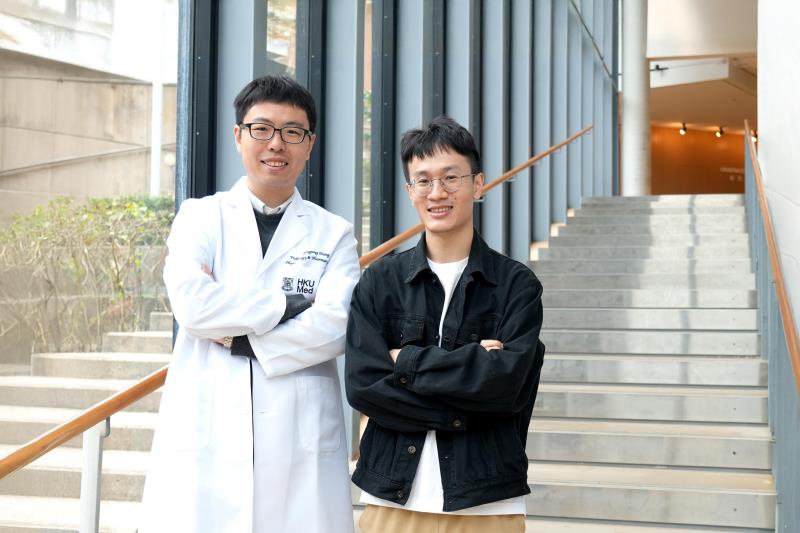
Researchers from the University of Hong Kong (HKU) have developed an innovative AI-based tool that can predict, with enhanced accuracy, the risk of six most common cardiovascular diseases (CVDs) up to 15 years prior to disease onset when combined with clinical data.
Using large-scale population data from the UK Biobank, the team developed the CardiOmicScore framework, leveraging multitask deep learning framework models and multiomics data to derive disease-specific proteomic (ProScore) and metabolomic (MetScore) risk scores for the six most common CVDs (coronary artery disease, stroke, heart failure, atrial fibrillation, peripheral artery disease, and venous thromboembolism) by profiling 2,920 proteins and 168 metabolites. [Nat Commun 2026;17:2269]
Results showed that both ProScore and MetScore improved risk stratification for all CVDs, providing predictive information complementary to traditional clinical predictors (such as lipid levels). Additionally, the inclusion of omics signatures, particularly ProScore, significantly enhanced CVD risk predictions, showing superior discriminative performance (C-index range: ProScore, 0.69–0.82; MetScore, 0.64–0.74) vs clinically based models, and can significantly enhance risk prediction across CVDs up to 15 years prior to disease onset when combined with clinical data (such as age and gender), increasing the C-index by 0.005–0.102. Importantly, these improvements in discrimination translated to clinical utility across all CVDs.
“Genes determine where we start – they define our baseline health risk. However, proteins and metabolites reflect our current physical health. Our AI tool is designed to decode these complex molecular signals, enabling doctors and patients to identify risks much earlier, and potentially change the trajectory of disease through timely lifestyle modifications and early prevention,” explained leader of the study, Professor Qingpeng Zhang of the Department of Pharmacology and Pharmacy, HKU.
Metabolomics and proteomics offer complementary insights into CVD risk, with metabolomics providing a broad profile of metabolites largely involved in lipoprotein metabolism, while proteomics focuses on a detailed set of proteins related to coagulation, inflammation, oxidative stress, and vascular remodelling. [Nat Commun 2023;14:604; Clin Chim Acta 2024;557:117877; Expert Rev Proteom 2017;14:117-136]
“Given the demonstrated effectiveness of multiomics approaches in improving risk identification for diseases such as diabetes and osteoarthritis, integrating these multiomics data with genetic risk and clinical information may further enhance the predictive performance for cardiovascular risk,” wrote the researchers. [Diabetologia 2024;67:102-112; Nat Commun 2024;15:2817]
The researchers believe that this study marks a shift in precision medicine from a static, gene-centric paradigm towards a more dynamic, multiomics-based approach. In the future, a small-volume blood sample may be sufficient to generate a comprehensive cardiovascular risk profile for multiple diseases, they suggested.
“We aim to leverage technology to identify and prevent diseases before they develop. By shifting health management from reactive treatment to proactive prediction and intervention, we aim to create a lasting impact for both public health and individual patient care,” noted Zhang.