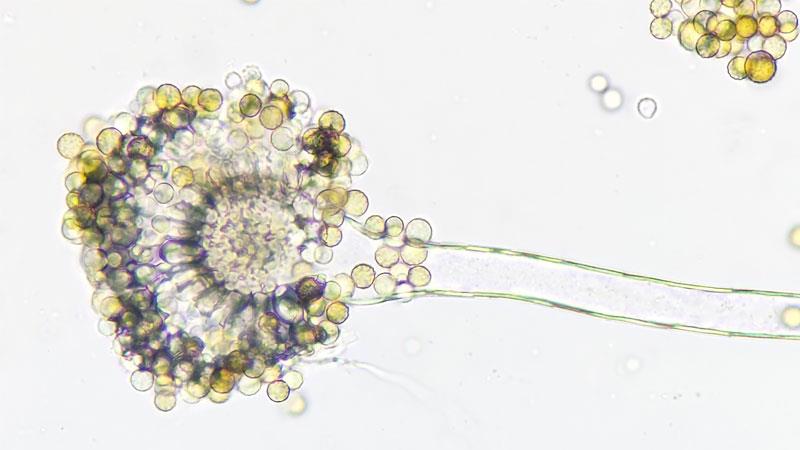
Sensitisation to recombinant Aspergillus fumigatus (rAsp f) is linked to severe bronchiectasis outcomes, according to a recent study.
Measurable responses to rAsp f allergens 12, 15, and 17 were associated with severe (hospitalised) exacerbations, particularly among patients with low baseline exacerbation frequency (low risk). “Sensitised” low-risk individuals exhibited significantly greater disease severity and a higher prevalence of bronchiectasis-COPD overlap than non-sensitised, low-risk individuals, a relationship absent in those with high baseline exacerbation frequency.
Polysensitization to the same allergens conferred a risk of severe (hospitalised) exacerbations. Notably, Asian patients sensitised to rAsp f allergens 12, 15, and 17 had the poorest clinical outcomes, with increased symptoms, poorer lung function, and severe disease.
“Our results indicate that A. fumigatus sensitisation, particularly to rAsp f allergens 12, 15, and 17, is a clinically relevant trait in bronchiectasis, identifying patients at increased risk of severe exacerbations,” said the study investigators. “This finding is particularly relevant for individuals with fewer baseline exacerbations and for those of Asian descent.”
Fungal sensitisation in bronchiectasis remains unclear
Fungal sensitisation is increasingly recognised as an endophenotype in chronic respiratory diseases. However, its specific role in bronchiectasis remains poorly understood.
Researchers conducted a prospective multicentre study across six tertiary centres in four countries—Singapore, Malaysia, the UK, and Italy—to evaluate fungal sensitisation in 277 patients with clinically stable bronchiectasis. They used an expanded panel of 35 fungal allergens and 9,695 assays to analyse sensitisation responses in relation to clinical features, exacerbation rates, and geographic location. [Chest 2025;169:932-946]
Low baseline exacerbation frequency was defined as <3, and high baseline exacerbation frequency as ≥3, over the 12 months preceding study recruitment. Severe exacerbations were those requiring IV antibiotics and hospital admission.
Asp f 12, 15, and 17 sensitivities predict exacerbation risk
After adjustment for age, sex, BMI, Pseudomonas colonization, and country of origin, patients with bronchiectasis who had measurable sensitisation responses to rAsp f 12, 15, and 17 had a significantly increased risk of hospitalized exacerbations compared with nonsensitised patients (rAsp f 12 odds ratio [OR], 3.26; p=0.005; rAsp f 15 OR, 2.13; p=0.047; and rAsp f 17 OR, 2.84; p=0.02).
Polysensitisation to rAsp f 12, 15, and 17 was associated with increased odds of severe exacerbations in bronchiectasis. Patients sensitised to a single allergen had an OR of 1.92 (p=0.03), whereas those sensitised to two or more allergens had a much higher OR of 4.47 (p<0.001).
When researchers assessed the relationships between individuals with high vs low exacerbation frequency and their sensitisation to rAsp allergens, low-risk individuals were associated with a higher rate of severe exacerbations (OR 2.53) than nonsensitised individuals.
Geographic comparisons showed that Asian patients experience a greater symptomatic burden, poorer lung function, and higher disease severity, with bronchiectasis-COPD overlap occurring more often than in non-Asian patients.
Fungal sensitisation a treatable trait in bronchiectasis
Taken together, the findings underscore that fungal sensitisation, particularly to specific rAsp allergens, is a clinically meaningful and potentially treatable trait, especially among individuals at risk, the authors said.
“To our knowledge, this study offers the most comprehensive evaluation of fungal sensitisation in bronchiectasis to date, defining its clinical significance across Asian and European cohorts and highlighting its potential as a treatable trait,” they added.