Overview
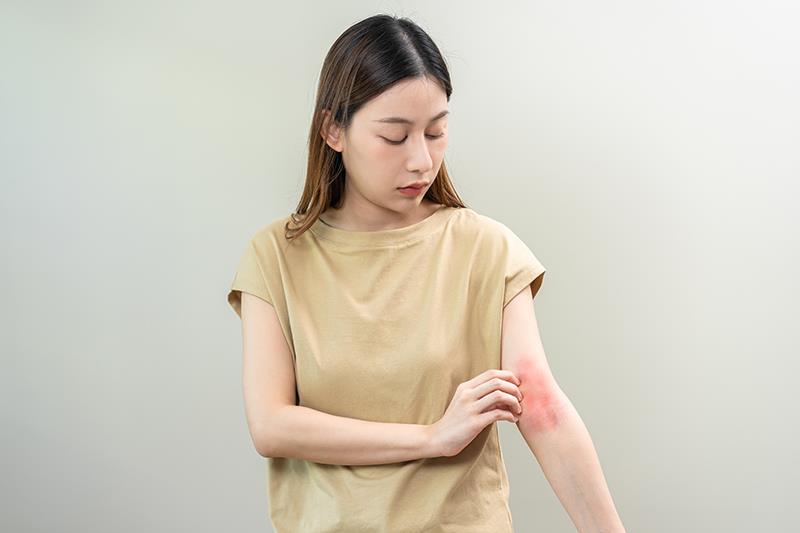
Atopic dermatitis is a kind of dermatitis that has specific
characteristics that you can know more in the Introduction
section.
Atopic dermatitis is one of the most common dermatological diseases affecting millions worldwide. It can affect both children and adults. More information about the prevalence of this disease in the Epidemiology section.
There are many causes of atopic dermatitis. The Etiology section enumerated these causes. The Pathophysiology section discussed the development of this skin disease.
Atopic dermatitis is one of the most common dermatological diseases affecting millions worldwide. It can affect both children and adults. More information about the prevalence of this disease in the Epidemiology section.
There are many causes of atopic dermatitis. The Etiology section enumerated these causes. The Pathophysiology section discussed the development of this skin disease.
History and Physical Examination
Among 34 countries, it has been found that pain is the
second most common symptom after pruritus. To know more, see the Clinical Presentation section.
 Atopic Dermatitis_summary
Atopic Dermatitis_summaryDiagnosis
In order to diagnose atopic dermatitis, the Hanifin and Rajka criteria in
the Diagnostic Criteria
section is used. In this section you will also learn how to assess the disease
severity.
The Laboratory Tests and Ancillaries section discuss what tests can be done to help with the diagnosis of atopic dermatitis.
There are several diseases that can mimic atopic dermatitis and the Differential Diagnosis section has enumerated them.
The Laboratory Tests and Ancillaries section discuss what tests can be done to help with the diagnosis of atopic dermatitis.
There are several diseases that can mimic atopic dermatitis and the Differential Diagnosis section has enumerated them.
Management
One of the goals of therapy is to reduce the symptoms to
know more about the goals of therapy. See the Principles
of Therapy section for further details.
Various topical and systemic therapies are recommended for the treatment of atopic dermatitis, such as corticosteroids, calcineurin inhibitors, phosphodiesterase type-4 (PDE-4) inhibitors, immunosuppressants, etc. The Pharmacological Therapy section contains a more extensive discussion on these treatment options.
There are Lifestyle Modifications (eg avoidance of trigger factors, skin care) and preventive measures that can be done in order to manage atopic dermatitis. These are discussed in the Prevention and Lifestyle Modifications sections.
Educating the patient or caregiver about the disease is also an important aspect in the management of atopic dermatitis. Refer to the Patient Education section for further details.
The sections of Other Therapy and Proactive Therapy discusses about the available options for the management of atopic dermatitis such as wet wrap therapy, phototherapy and immunoadsorption.
Various topical and systemic therapies are recommended for the treatment of atopic dermatitis, such as corticosteroids, calcineurin inhibitors, phosphodiesterase type-4 (PDE-4) inhibitors, immunosuppressants, etc. The Pharmacological Therapy section contains a more extensive discussion on these treatment options.
There are Lifestyle Modifications (eg avoidance of trigger factors, skin care) and preventive measures that can be done in order to manage atopic dermatitis. These are discussed in the Prevention and Lifestyle Modifications sections.
Educating the patient or caregiver about the disease is also an important aspect in the management of atopic dermatitis. Refer to the Patient Education section for further details.
The sections of Other Therapy and Proactive Therapy discusses about the available options for the management of atopic dermatitis such as wet wrap therapy, phototherapy and immunoadsorption.
Frequently Asked Questions
How is atopic dermatitis clinically diagnosed?
Atopic dermatitis is diagnosed clinically using the patient history, cutaneous atopic findings and physical examination. Key features include pruritus, typical age-related morphology and distribution, chronic or relapsing dermatitis, and a personal or family history of atopy. Assess relevant triggers such as allergens, irritants, infection, stress and temperature exposure. Read more
Which tests support atopic dermatitis assessment?
Laboratory tests may support assessment but do not replace clinical diagnosis. Serum total IgE, specific IgE testing and skin prick tests may help identify allergic disease or sensitization. Eosinophil count, LDH and TARC may be useful markers of disease progression. Routine FLG genetic testing is not recommended. Read more
How should topical corticosteroids be selected?
Topical corticosteroids are first-line therapy for mild to severe atopic dermatitis when nonpharmacological measures are insufficient. Selection depends on flare severity, lesion site, distribution, patient age, preference and vehicle. Use the least potent effective product, especially for long-term therapy, children and delicate areas such as the face, neck and skin folds. Read more
What skin care advice reduces flares?
Skin care should focus on cleansing, hydration, moisturization and trigger avoidance. Recommend short lukewarm baths, gentle fragrance-free cleansers, patting dry and moisturizer application within 2 to 3 minutes after bathing. Emollients should be used regularly, including when symptoms are absent, to restore barrier function and reduce flare frequency. Read more
How is relapse prevented after disease control?
After control is achieved, proactive maintenance can reduce relapse risk in moderate atopic dermatitis. Intermittent class II to III topical corticosteroids once or twice weekly, or topical calcineurin inhibitors such as tacrolimus two to three times weekly, may be applied to areas that commonly flare. Continue baseline barrier care. Read more