
Principles of Therapy
Treat organic causes of hypogonadism (eg pituitary masses, hyperprolactinemia) if indicated. Prior to the start of testosterone substitution, there should be confirmation of low serum testosterone and a confirmation of need based on clinical findings. Only if the potential benefit exceeds the risk can replacement testosterone be started. During hormone replacement therapy (HRT), serum testosterone levels should be close to normal throughout the day and should ideally follow the normal diurnal pattern. It is recommended that a baseline digital rectal exam (DRE) and prostate-specific antigen (PSA) level be obtained before starting testosterone therapy.
Pharmacological therapy
Natural Testosterone Preparations
Only preparations of natural testosterone should be used. The use of 17-α-alkylated androgen preparations are not recommended. These can cause poor androgen effects, adverse lipid changes, and hepatic side effects. There is not enough evidence of benefit to recommend Dihydrotestosterone (DHT), Dehydroepiandrosterone (DHEA), Dehydroepiandrosterone sulfate (DHEA-S), human chorionic gonadotropin (hCG), androstenediol or androstenedione in older men with hypogonadism.
Product Selection
Some authorities recommend the use of short-acting preparations of testosterone so that if a complication develops, rapid discontinuation can be achieved. Oral, parenteral, transdermal gel, and implantable preparations of testosterone are available in Southeast Asia; transdermal patches are available elsewhere. Product selection should be agreed upon between the clinician and patient prior to the start of therapy.
Testosterone undecanoate is the most widely used and safest oral mode of administration. This rarely causes an increase in testosterone levels above the mid-range. Oral preparation resorption of testosterone is influenced by the intake of fatty foods.
 Hypogonadism in Males - Late-Onset_Management 2
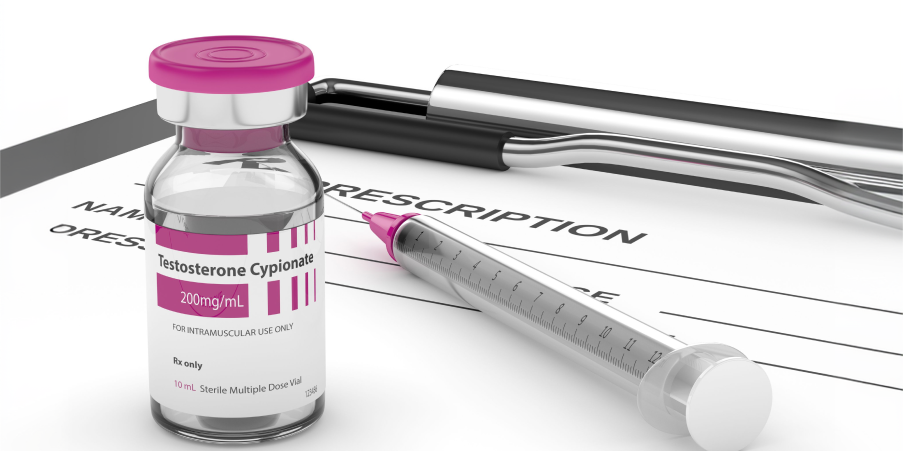
A long-acting intramuscular (IM) injection of testosterone undecanoate is also available, given in intervals of 3 months. This ensures normal testosterone serum concentration for the entire 3-month period. Testosterone cypionate and enanthate are available as short-acting IM with intervals of 2-3 weeks. These may cause fluctuations in serum testosterone from high levels to subnormal levels.
Transdermal testosterone preparations are available as skin patches or gel. This provides a uniform and normal serum testosterone level for 24 hours. The gel has the advantages of less incidence of skin irritation compared with the patch, invisibility of application, and flexibility of dosing, though with the risk of interpersonal transfer (eg to a partner or another person who is in close contact). Testosterone being applied topically in the axillae has been found to be safe and effective in a multinational open-label clinical study and approved in the United States and Europe.
Sublingual and buccal testosterone tablets are effective and well-tolerated delivery systems that can provide a rapid and uniform achievement of physiological testosterone level with daily administration. Subdermal depots need to be implanted every 5-7 months and offer a long period of action without significant serum fluctuation of the testosterone level. There is a risk of infections and extrusions.
Gonadotropins
Example drugs: Recombinant human chorionic gonadotropin (hCG), Follicle-stimulating hormone (FSH) formulations
Gonadotropins are indicated for patients with secondary hypogonadism seeking fertility.
Potential Benefits of Therapy
 Hypogonadism in Males - Late-Onset_Management 3
Effects on Body Composition
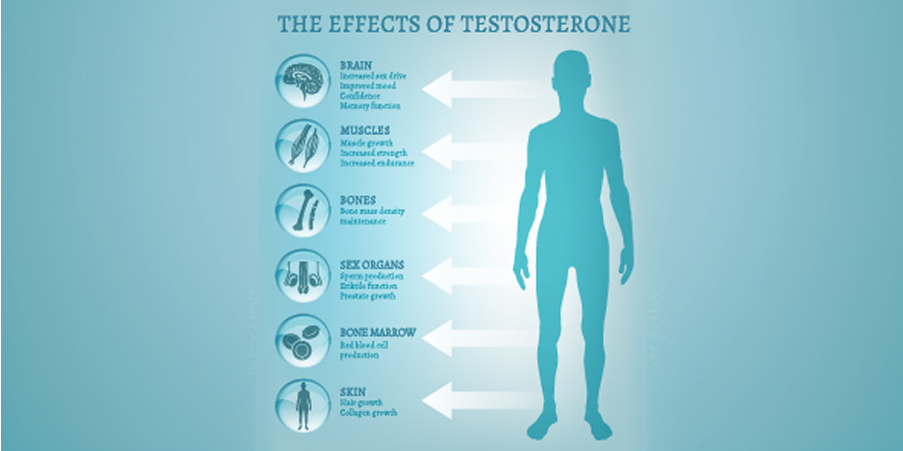
Androgen supplementation in elderly men has been shown to moderately increase muscle mass. Fat mass may be modestly decreased. Reports of an increase in strength have been inconsistent. Testosterone treatment seems to improve perception of physical function.
Skeletal Effects
Bone mineral density has been shown to increase. The lower the pre-treatment testosterone, the greater effect testosterone treatment seems to have on bone mineral density. Reports of treatment effects on biochemical markers of bone turnover have been inconsistent.
Libido and Erectile Function
Testosterone appears to have a moderate to large favorable effect on libido. Testosterone use in elderly men may have a minimal to small favorable effect on erectile dysfunction. Metabolic diseases such as diabetes may reduce these benefits. As some men with erectile dysfunction and low serum testosterone levels may not respond adequately to testosterone, addition of a phosphodiesterase-5 inhibitor may be indicated.
Cognition
There are limited observations of beneficial effects of testosterone treatment on cognitive function in elderly men.
Mood and Quality of Life
Studies have not shown consistently that there is improvement in mood or quality of life in elderly men treated with androgens.
Glycemic and Lipid Control
Studies have shown positive effects on glycemic and lipid control, insulin resistance, and visceral adiposity in hypogonadal men with impaired glucose tolerance and lipid profiles. Thus, there is a consequent decrease in the cardiovascular (CV) risk.
Adverse Effects
Prostate
It is not known if testosterone supplementation in the older male promotes the development or acceleration of prostate cancer. Testosterone supplementation in older men seems to induce only a small increase in the volume of the prostate with an eventual moderate increase in the prostate-specific antigen level.
Hematology
Testosterone stimulates erythropoiesis. A significant rise in blood cell mass and hemoglobin can occur from testosterone therapy in older men. If the hematocrit rises to >50%, withholding therapy may be indicated, or in some cases phlebotomy may be necessary.
Obstructive Sleep Apnea
Evidence is inconsistent in correlating testosterone supplementation with obstructive sleep apnea.
Gynecomastia
Testosterone may be associated with the development of gynecomastia from the aromatization of testosterone to estrogen.
Lipid and Cardiovascular (CV) Safety
Data is insufficient to determine whether testosterone supplementation would increase, decrease, or have no effect on cardiovascular disease.
Contraindications to Testosterone Administration
Suspected or confirmed carcinoma of the prostate or breast is an absolute contraindication to testosterone replacement. Suspected are those with a palpable prostate nodule or induration or a prostate-specific antigen (PSA) of >4 ng/mL or a PSA of 3 ng/mL in men at high risk of prostate cancer (eg African Americans or men with first-degree relatives with prostate cancer). Testosterone substitution should be avoided in men with significant polycythemia, untreated sleep apnea, severe heart failure, uncontrolled cardiovascular disease, male infertility, hematocrit of >0.54%, or severe lower urinary tract symptoms due to benign prostatic hyperplasia or significant bladder outlet obstruction.
Nonpharmacological
Weight Loss
Low-calorie diets can improve testosterone levels and normalize gonadotropins, which may reverse obesity-associated secondary hypogonadism.
Physical Activity
 Hypogonadism in Males - Late-Onset_Management 4
Studies have shown similar benefits with direct correlation to exercise duration and weight loss. Combining testosterone therapy with lifestyle changes may yield better outcomes in symptomatic patients.