
Evaluation
The decision to treat wrinkles depends on the degree to which they bother the patient, the nature and severity, and the patient’s willingness to accept the risks and costs of treatment. It is suggested that combined modalities tailored to the patient’s skin type and location can be the most effective strategy in managing rhytides. An essential consideration in resurfacing modalities involves careful selection of appropriate patients to undergo these procedures.
Pharmacological therapy
Botulinum Toxin
 Rhytides (Wrinkles)_Management 1
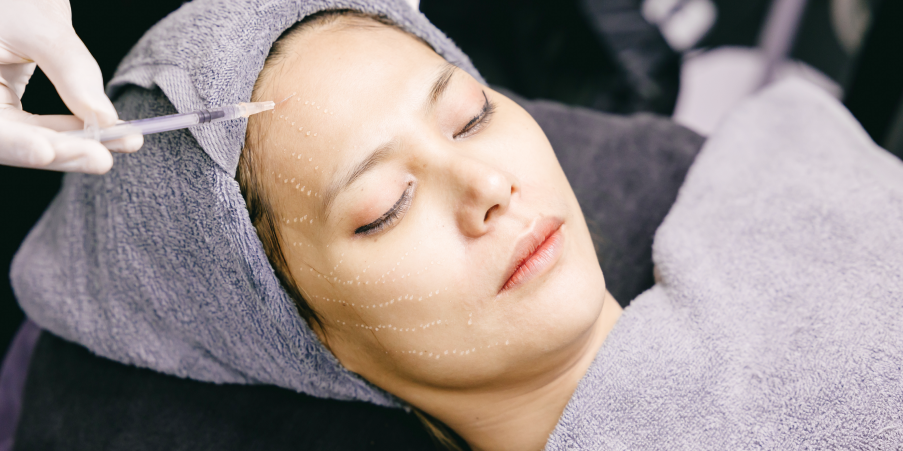
Botulinum toxin is the most appropriately used for dynamic wrinkles of the upper face that are due to muscle hypertonicity. The approved indications are glabellar lines, lateral canthal lines (crow’s feet), and forehead lines. Available data suggests that at least moderate improvement is shown in 50-75% of patients treated for glabellar lines. Peak improvement is seen approximately 1 week to 1 month after injection and lasts 3-4 months. The neurotoxic effects cause a reduction in the tone of muscles that cause lines in the forehead, glabellar, and periocular areas. This causes localized muscle relaxation in specific overactive muscles that results in smooth overlying skin and reduction of wrinkles. The disadvantages or risks of botulinum toxin include headache, bruising, ptosis, paresthesia, and the need for frequent retreatment. This is contraindicated in patients with keloidal scarring or neuromuscular disorders (eg myasthenia gravis, body dysmorphic disorder).
Chemical Peels
 Rhytides (Wrinkles)_Management 2
Chemical peels provide superficial or medium-depth skin resurfacing that is appropriate for patients with mild facial wrinkles. Coarse wrinkles may respond better to deep peels. These are contraindicated in patients with telangiectasias, confirmed malignant lesions, nevoid or nevus lesions, and those with hepatorenal or cardiac disease. Patients should be assessed for skin type, complexion, skin texture, skin thickness, degree of photoaging, wrinkle severity, and age-related gravitational changes. The skin type and complexion will help determine the specific chemical peeling agent that will be used. The patient’s lifestyle needs to be considered because early sun exposure will increase the risk of adverse effects. Chemical peels chemically destroy the epidermis and the depth will depend on the agent, concentration, and extent of application. The disadvantages or risks of chemical peels include hyperpigmentation, infection, scarring, and pain.
Superficial (Exfoliation-Epidermal)
Agents: Glycolic acid (low concentration), Jessner’s solution, Pyruvic acid, Trichloroacetic acid (TCA) 10-20%, Tretinoin, 5-Fluorouracil, Salicylic acid
Superficial peels remove stratum granulosum and papillary dermis. These usually require multiple peels that range from six to eight peels per week or every other week.
Medium Depth (Papillary Dermal)
Agents: Glycolic acid 70%, TCA 35% alone or augmented with Jessner’s solution, Phenol 88%
Medium-depth peels cause necrosis of the epidermis to the upper reticular dermis.
Deep (Reticular Dermal)
Agent: Baker-Gordon Phenol formula, TCA 50%
Deep peels cause necrosis that extends into the midreticular dermis.
Hydroxy Acids
Products used contain alpha- and beta-hydroxy acids. Alpha-hydroxy acid acts by thinning the stratum corneum, promoting epidermolysis, dispersing basal layer melanin, and increasing collagen synthesis within the dermis. Beta-hydroxy acid has similar anti-inflammatory action to alpha-hydroxy and is often less irritating.
Retinoids (Topical)
Example drugs: Adapalene, Tazarotene, Tretinoin
Clinical trials generally lasting 6 months have shown some improvement in wrinkling, mottling, roughness, and hyperpigmentation in the majority of patients treated with these retinoids. Continued use seems to be needed to maintain a benefit. Retinoids have been shown to increase collagen production, upregulate fibroblast proliferation, and block dermal matrix degradation following sun exposure. The disadvantage of retinoids includes increased penetration of ultraviolet B (UVB) radiation by as much as one-third as compared to untreated skin. Sun protection and sun avoidance are advised to protect against sunburn and further photoaging. Retinoids are contraindicated in pregnant women.
Tretinoin (Topical)
Tretinoin, when applied daily, may improve fine wrinkles in patients with mild to severe photodamage. This may cause itching, burning, erythema, and skin peeling.
Tazarotene
Tazarotene, when applied daily, may improve fine wrinkles; however, this can cause burning of the skin.
Skin Booster Injections
Example drugs: Hyaluronic acid, deoxyribonucleic acid (DNA) fragments (Polydeoxyribonucleotide [PDRN], polynucleotides), Polymer D-lactic acid (PDLA), Poly-L-lactic acid (PLLA), exosomes, platelet-rich plasma (PRP)
Skin booster injections are also referred to as skin hydrators, microfillers, or hydrofillers. Biological materials or bioactives improve the extracellular matrix of the dermis by stimulating collagen and elastin production to be able to maintain and absorb moisture, stimulating and regulating the secretion of growth factors in connective tissues of the skin, and reducing oxidative stress, thereby improving the skin’s condition.
Platelet-rich plasma (PRP) is an autologous solution with highly concentrated platelets and fibrin that is obtained from blood that may induce extracellular matrix remodeling and stimulate fibroblast proliferation of skin and collagen synthesis. Exosomes are a type of extracellular vesicle that plays a significant role in the regulation of keratinocyte proliferation and differentiation, expression of inflammatory factors, fibroblast function, elastin production, transforming growth factor-beta delivery, and modulation of the extracellular matrix. Studies showed improvement in skin hydration, elasticity, roughness, radiance, texture, and quality across patients with different skin types and ethnic origins given non-cross-linked Hyaluronic acid. The disadvantages or risks of skin booster injections are mild erythema and swelling, bruising, pigmentation at the injection site, pain during the procedure, and granuloma formation and necrosis (rare). These are injected superficially into the dermal layer, minimally invasive, relatively safe, and with minimal downtime. These have finer consistency compared to dermal fillers.
Skin Fillers
 Rhytides (Wrinkles)_Management 3
Skin fillers include temporary fillers (eg Collagen, Hyaluronic acid, Calcium hydroxylapatite [CaHA], PLLA); permanent fillers (eg Hydroxyethyl methacrylate, Polymethylmethacrylate [PMMA] microspheres, hydrogel polymers, Silicone) and viable autologous fat injections. These are usually used in coarse (deep) wrinkles that are not due to muscle hypertonicity. These fill wrinkles and furrows and replace lost tissue volume and fill and efface coarse wrinkles. The disadvantages or risks of skin fillers are bruising, pain, and the frequent re-treatment that is needed.
Other Drug for Photoaging
N6-furfuryladenine (N-6-furfuryladenine)
N6-furfuryladenine is also known as kinetin and is a plant growth hormone with antioxidant activities. This may be useful for patients who cannot tolerate retinoids and alpha-hydroxy acids. In a large 6-month study, it has been shown to reduce skin roughness, hyperpigmentation, and fine wrinkles; however, further double-blind studies are warranted.
Nonpharmacological
Ablative Resurfacing
 Rhytides (Wrinkles)_Management 4
Ablative resurfacing is a laser therapy that includes carbon dioxide and erbium yttrium-aluminum-garnet (Er:YAG) lasers. This is indicated for mild to moderate wrinkles. A carbon dioxide laser is used for the treatment of perioral vertical furrows, periocular crow’s feet, and glabellar rhytides. The skin cells are heated, resulting in a controlled thermal burn. The disadvantages or risks of ablative resurfacing are infection, scarring, pain, pigment changes, and prolonged healing. The procedure requires destruction of the dermis and thus requires a substantial period of healing and regrowth.
Non-ablative Rejuvenation
Non-ablative rejuvenation includes laser, light, and infrared therapy, including intense pulsed dye, fractional photolysis, neodymium yttrium aluminum garnet (Nd:YAG) diode and erbium glass lasers, photodynamic therapy, and intense pulsed light and radiofrequency. This refers to techniques that avoid damage to the epidermis while treating the dermis to produce the desired resurfacing effect. This is indicated for mild to moderate wrinkles. The disadvantages or risks of non-ablative rejuvenation are the need for multiple treatments to obtain the desired effect and pigment changes.
Dermabrasion
Dermabrasion may be used for all types of wrinkles, especially in the difficult-to-treat perioral and vermillion regions, but one should be careful about the risk of scarring and post-inflammatory hyperpigmentation. The epidermis is removed to various depths by using a “sanding device” or abrasive surfaces to remove the epidermis and create a wound in the papillary or reticular dermis. The disadvantages or risks of dermabrasion include infection, acne outbreaks, scarring, pain, and pigment changes. This should be used with caution in patients with Fitzpatrick skin types III and higher; dyspigmentation has been reported.
Microdermabrasion
 Rhytides (Wrinkles)_Management 5
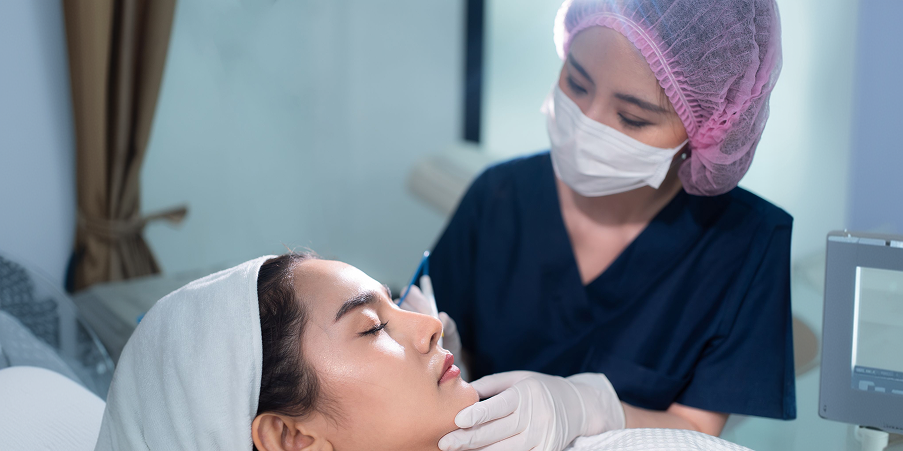
Microdermabrasion may be used in fine rhytides. The small-particle microcrystals’ (eg aluminum dioxide, sodium chloride, or sodium bicarbonate) abrasive action is used to wound the epidermis, coupled with suction to remove any skin debris. This stimulates an inflammatory response within the epidermis, which prompts new stratum corneum formation within 3-5 days. The disadvantages or risks of microdermabrasion are erythema, requiring increased moisturization and sun protection. This procedure is not recommended for all skin types and should be used with caution in patients with Fitzpatrick skin types IV–VI, rosacea, sensitive or thin skin due to the increased risk of irritation and hyperpigmentation.
Rhytidoplasty or Rhytidectomy (Face Lift)
Rhytidoplasty, or rhytidectomy, may be considered in patients with significant skin laxity, in those demanding predictably significant skin tightening, and for reconstruction of the anatomic changes that occur with aging. This repositions soft tissue and reduces excess skin. This is contraindicated in patients with comorbidities such as diabetes, connective tissue disorders, diseases with bleeding diathesis, those on corticosteroid therapy, and smokers.
Prevention
Sun Protection
Patients should be made to understand that protection from the sun at any age will reduce the risk of photoaging (including wrinkles), actinic keratoses, and squamous cell cancer. Treatments for wrinkles are less effective and may be more hazardous without adequate sun protection.
Protection Strategies
Use a wide-brimmed hat and protective clothing. Stay out of the sun, especially from 10 AM to 4 PM, or avoid direct sunlight.
Sunscreens
 Rhytides (Wrinkles)_Management 6
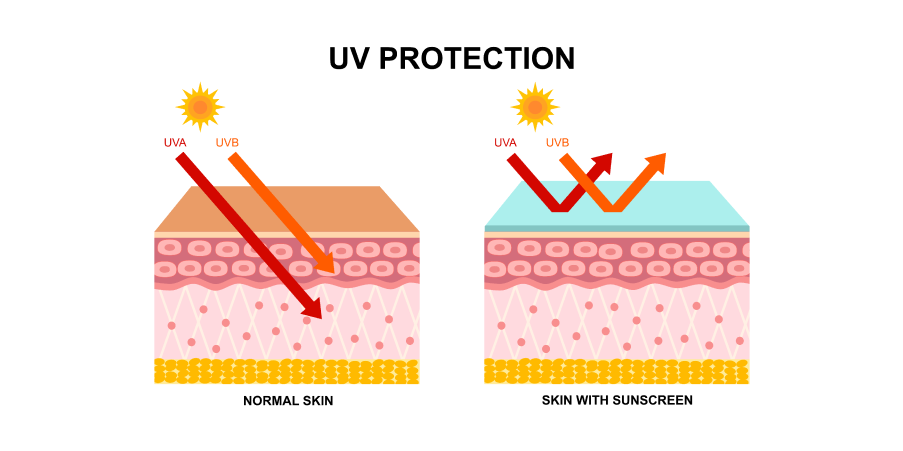
Sunscreens that block ultraviolet B (UVB) radiation are readily available. Sun protection factor (SPF) corresponds to the ratio of doses of ultraviolet (UV) radiation (predominantly UVB radiation that results in erythema [sunburn]) with protection to the doses that result in erythema without protection. Sunscreen that is broad spectrum with a minimum SPF of 30 is important in any skin care regimen to prevent photoaging as well as skin cancers.
Physical or inorganic sunscreen agents physically block UV radiation skin penetration by reflecting or scattering light. The most common agents are titanium dioxide and zinc oxide. These blocks both ultraviolet A (UVA) and UVB radiation. These are well-tolerated on the skin with a low risk of irritation. Chemical or organic sunscreen agents absorb the harmful UV rays and transform them into longer-wave radiation that is harmless. Adequate application of 2 mg/cm² (approximately ½-1 tsp) of sunscreen is imperative for sunscreen to be effective. A less than recommended application results in lowered SPF. The application should be 15-30 minutes before sun exposure and reapplied every 2-3 hours, especially after swimming and sweating.
| SUNSCREEN COMPONENTS1 | |
| COMPONENT | REMARKS |
| UVA Absorbers | |
| Avobensone (Parsol 1789, Butylmethoxydibenzoylmethane) |
|
| Meradimate (Menthyl anthranilate) |
|
| UVB Absorbers | |
| Aminobenzoic acid (Para-aminobenzoic acid [PABA]) |
|
| Cinoxate |
|
| Ensulizole (Phenylbenzimidazole sulfonic acid) |
|
| Ethylhexyl-methoxycinnamate (Octyl methoxycinnamate, Octinoxate, Parsol MCX) |
|
| Octocrylene |
|
| Padimate O, Padimate A (Octyl dimethyl PABA) |
|
| Salicylates (Homosalate, Octisalate, Trolamine salicylate) |
|
| UVA and UVB Absorbers/Blockers | |
| Bemotrizinol (Bis-ethylhexyloxyphenol methoxyphenol triazine, Tinosorb S) |
|
| Bisoctrizole (Methylene bis-benzotriazolyl tetramethylbutylphenol, Tinosorb M) |
|
| Dioxybenzone (Benzophenone-8) |
|
| Drometrizole trisiloxane (Mexoryl XL) |
|
| Examsule (Terephthalylidene dicamphor sulfonic acid, Mexoryl SX) |
|
| Oxybenzone (Benzophenone-3) |
|
| Sulisobenzone (Benzophenone-4) |
|
| Titanium dioxide |
|
| Zinc oxide |
|
1This list is not an all encompassing list of sunscreen components. These and other effective agents are found in various sunscreen preparations throughout different countries. Please see the latest MIMS for specific formulations and prescribing information..