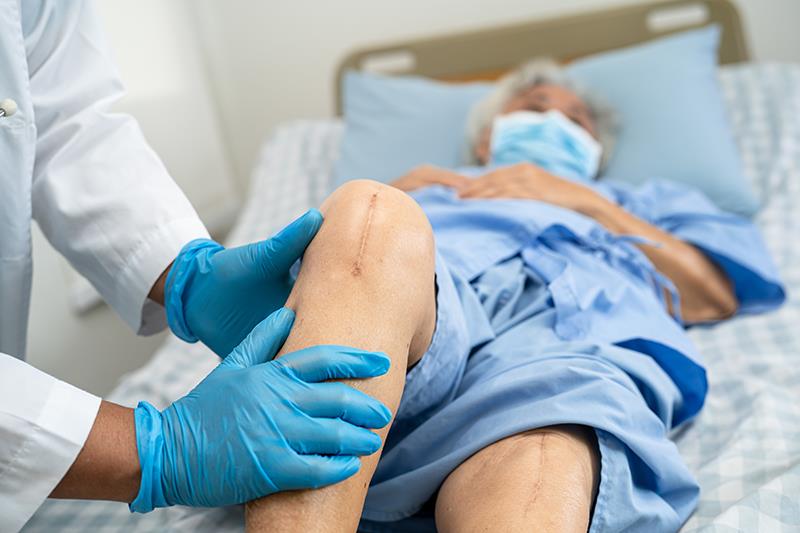
Patients who underwent total knee arthroplasty (TKA) in the morning and received physiotherapy review in the same afternoon have a higher chance of being discharged within 24 h, suggests a Singapore study. This is possible because of early ambulation and adequate time for the spinal anaesthesia to wear off.
However, the “timing of operation and physiotherapy should not be an absolute guide to decide which patient will benefit from 24-h discharge, as more than 90 percent of patients who completed their operation or had physiotherapy after 5 pm were discharged within 24 h,” the researchers said.
“Timing of surgery and physiotherapy can act as a guide for surgeons to determine which patient will most likely be discharged within 24 h,” they added.
A total of 342 patients who underwent enhanced recovery after surgery (ERAS) day surgery TKA between August 2020 and July 2021 were followed up prospectively. The research team recorded patient characteristics and postoperative outcomes, including the number of physiotherapy sessions needed prior to clearance for home, time takes after surgery, to ambulate >10 m, and length of stay (LOS).
Participants were categorized based on surgical end time (ie, morning, afternoon, or evening) and time of physiotherapy review (ie, morning, afternoon, evening, or morning after). Those who were discharged within 24 h were deemed to have successfully passed the ERAS day surgery protocol.
For operative timing, patients who completed the procedure in the morning experienced the shortest LOS (p=0.001) and had a higher ERAS day surgery pass rate than those in the afternoon group (p=0.016). [Singapore Med J 2026;67:374-379]
For physiotherapy timing, patients in the afternoon group secured the shortest time to ambulate >10 m (p<0.001), experienced the shortest LOS (p<0.001), and had a higher ERAS day surgery pass rate than those in the morning after the operation group (p=0.005).
“Patients who had their surgery completed after 5 pm should be counselled on the possibility of extending their stay for more than 24 h, [and] alternatives such as general anaesthesia or careful titration of spinal anaesthesia should be considered for this group of patients,” the researchers said.
“Hospitals can also consider improving physiotherapy support by optimizing manpower allocation and extending after-hour physiotherapy services, so that more patients can benefit from early ambulation,” they added.
Cut-off time
The timing of operation determines the timing of physiotherapy review to some extent, and patients who completed the surgery in the morning could receive physiotherapy even in the late afternoon. However, those who completed their operation in the evening possibly met with the physiotherapist within the same 4-h evening window due to the 9 pm cut-off time.
“Hence, the spinal anaesthesia might not have completely worn off before their physiotherapy session,” the researchers said. “This could explain why the evening physiotherapy group had the lowest percentage of patients cleared for home in the first attempt.”
This group could consider surgery under general anaesthesia as an alternative, said the researchers.
In an earlier study of 883 consecutive primary TKAs, general anaesthesia enabled a participation rate of 97.7 percent in physical therapy on the day of surgery, allowing early discharge. ERAS TKA protocols using general anaesthesia also led to a decease in LOS relative to non-fast-tracked protocols. [J Arthroplasty 2019;34:1889-1896; J Arthroplasty 2019;34:1889-1896]
On the other hand, a comparative study of 270,251 primary elective TKAs reported the superiority of spinal over general anaesthesia with regard to reduced risks of LOS >3 days and lower rates of 30- and 90-day readmission. [J Arthroplasty 2023;38:673-679.e1]
“Traditionally, TKAs were an inpatient procedure whereby patients are expected to stay minimally overnight after surgery for observation and rehabilitation,” the researchers said. “However, there is now an increasing trend towards outpatient TKA.”