
Clinical Presentation
 Hypogonadism in Males - Late-Onset_Initial Assesment 1
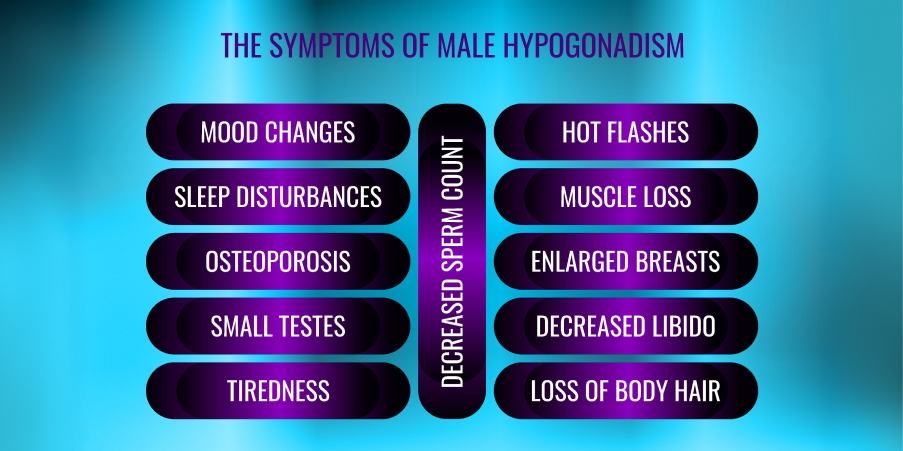
Symptoms of hypogonadism in males include decreased sexual desire and reduced erectile quality and frequency. Patients may also experience mood changes, such as decreases in intellectual activity, cognitive function, and spatial orientation ability, as well as fatigue, depression, and irritability. Sleep disturbances may also be present. Physical manifestations include a decrease in lean body mass with reduced muscle volume and strength, an increase in visceral fat, and a decrease in body hair accompanied by skin alterations. In addition, osteopenia, osteoporosis, and an increased risk of bone fractures may develop due to decreased bone mineral density. Hot flushes may also occur.
Tiền sử bệnh
 Hypogonadism in Males - Late-Onset_Initial Assesment 2
A full medical history should be undertaken, including an investigation for diabetes mellitus (DM), hypertension, smoking, heart disease, sleep apnea, and medication history (eg use of opioids or high-dose glucocorticoid therapy).
Khám thực thể
Measure the patient’s body weight, heart rate, and blood pressure. Assessment of androgen deficiency-related physical manifestations should be noted. Prostate evaluation should be done, including a digital rectal exam (DRE) and measurement of prostate-specific antigen (PSA).
Screening
Several questionnaires may be used to evaluate climacteric symptoms, the patient’s well-being, and sexual function, including the Androgen Deficiency in Aging Males (ADAM) Questionnaire, the Aging Male Survey (AMS), and the Massachusetts Male Aging Study (MMAS) Screening Questionnaire. These questionnaires have high sensitivity but low specificity, making them more useful for monitoring response to testosterone replacement therapy than for diagnosing male hypogonadism.