
Tổng quan
Parkinson’s disease is a common, age-related,
chronic, progressive disorder caused by loss or degeneration of dopaminergic
neurons in the substantia nigra of the midbrain, as stated in the Introduction section.
There is an increased prevalence and incidence
rate of Parkinson’s disease in the elderly. A detailed discussion about the
prevalence of Parkinson’s disease and Parkinson’s disease dementia is in the Epidemiology section.
The Pathophysiology section
states that the pathologic hallmark of Parkinson’s disease is loss of
dopaminergic substantia nigra neurons, with surviving neurons often containing
a characteristic cytoplasmic inclusion body (Lewy body). The developmental
process of Parkinson’s disease in affected patients is in this section.
The Risk Factors section
enumerates the factors that are associated with the development of Parkinson’s
disease and Parkinson’s disease dementia.
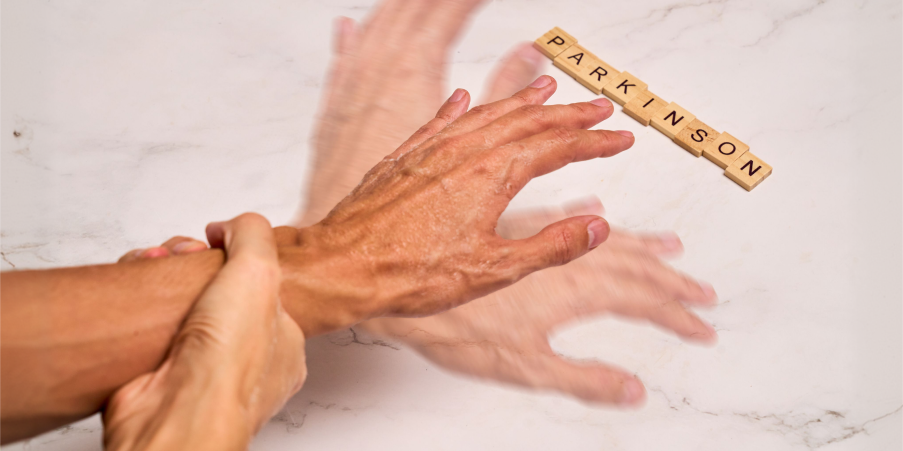 Parkinsons Disease and Dementia_Disease Summary
History and Physical Examination
The Clinical Presentation section describes the signs and symptoms of patients with Parkinson’s disease and Parkinson’s disease dementia.
Chẩn đoán
The Diagnosis
or Diagnostic Criteria section
features the clinical diagnostic criteria for Parkinson’s disease and
Parkinson’s disease dementia.
Tools that are used to evaluate Parkinson’s
disease dementia are in the Screening
section.
Discussions on neuroimaging
in the confirmation of Parkinson’s disease are in the Imaging section.
Potential signs that
would indicate alternate pathology and the absolute exclusion criteria are
listed in the Differential Diagnosis
section.
Xử trí
General therapy principles and treatment goals
in the choice of medication for the management of Parkinson’s disease are in
the Principles of Therapy
section.
The Pharmacological Therapy section discusses in detail the therapy option in the
treatment of Parkinson’s disease. The treatments for neurological and
psychiatric complications of Parkinson’s disease are also discussed in this
section.
The Nonpharmacological
section includes things to educate the patient and supportive
treatments in the management of Parkinson’s disease.
Neurosurgery as a
treatment option for patients with Parkinson’s disease who are unresponsive to
pharmacological therapy is explained in the Surgery section.
The Complications section identifies the
different psychiatric complications of Parkinson’s disease.


