
Giới thiệu
Dermatophytoses are superficial fungal infections that have different presentations and are named based on location. This is usually with epidermal involvement and affects healthy individuals, but unusual or extensive presentations may indicate an underlying immunologic problem.
Dịch tễ học
Dermatophytoses are highly prevalent worldwide, and dermatophytes represent the most common pathogens responsible for superficial fungal infections.
In general, tinea infections are most prevalent after puberty, although the age distribution varies depending on the type of dermatophytosis. Certain groups, particularly children, show an increased susceptibility to tinea corporis. Tinea cruris commonly affects adolescent and young adult males, while tinea pedis is more frequently seen in adolescents and adults and is uncommon in prepubescent children. Both tinea cruris and tinea pedis are more common in males than in females.
Dermatophytoses occur worldwide but are more prevalent in tropical regions due to high temperatures and humidity. According to the World Health Organization (WHO), these infections affect approximately 25% of the global population, with 30–70% of adults acting as asymptomatic carriers.
Nguyên nhân
Tinea Corporis (Ringworm)
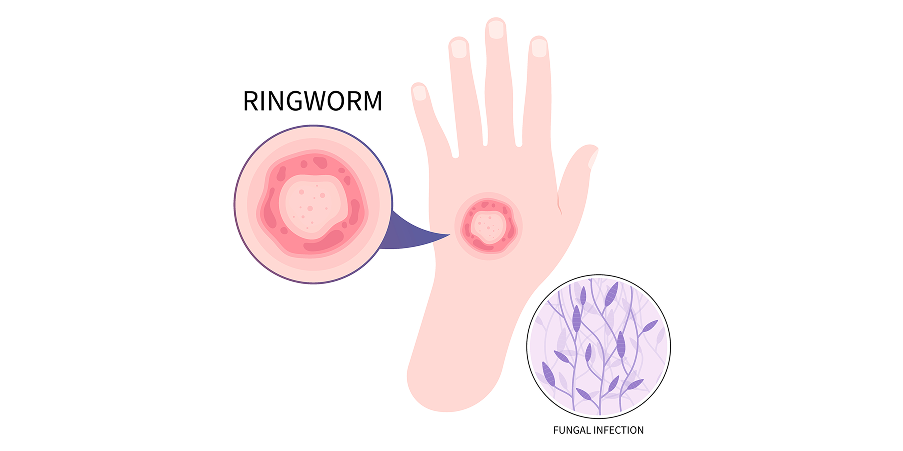 Tinea Corporis, Cruris and Pedis_Disease Background 1
Dermatophytes that cause tinea corporis belong to the genera Trichophyton, Epidermophyton and Microsporum. The most common organisms are Microsporum canis, Trichophyton mentagrophytes and Trichophyton rubrum.
Tinea Cruris (Jock Itch)
The most common causative species of tinea cruris is Trichophyton rubrum, followed by other frequent pathogens such as Epidermophyton floccosum, Trichophyton mentagrophytes/interdigitale complex and Trichophyton indotineae.
Tinea Pedis (Athlete’s Foot)
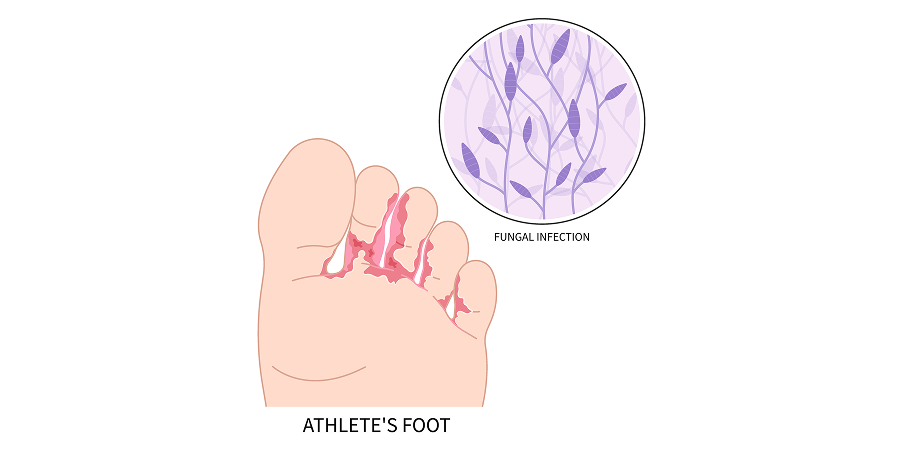 Tinea Corporis, Cruris and Pedis_Disease Background 2
The plantar hyperkeratotic or moccasin type of tinea pedis is usually caused by Trichophyton rubrum and sometimes Trichophyton mentagrophytes. The vesicular or vesiculobullous type is usually caused by Trichophyton mentagrophytes.
Sinh lý bệnh
Individual susceptibility to fungal infections varies with familial and genetic factors and are likely tied to defects in both innate and adaptive immunity. A deficiency in defensin β4 may increase vulnerability to a broad range of dermatophytes.
Infection typically occurs through direct skin contact with contaminated soil, animals, or other humans; contact with fomites; or from secondary spread from other sites of dermatophyte infection. Patients with tinea corporis who have close contact with cats or dogs are frequently infected with Microsporum canis. Tinea corporis may also occur in outbreaks among athletes who engage in close skin-to-skin contact (eg wrestlers), where it is referred to as tinea corporis gladiatorum. Trichophyton tonsurans is a frequent causative organism in these cases.
Yếu tố nguy cơ
Risk factors for dermatophyte infections include advanced age, excessive heat, high humidity, excessive sweating, tight-fitting clothing, prolonged use of occlusive footwear, and immunosuppression caused by conditions such as diabetes mellitus, lymphomas, and Cushing syndrome, while additional underlying conditions that impair host defenses may further increase susceptibility to infection.