
Tổng quan
Vaginitis is
inflammation in the walls of the vagina commonly caused by infections, hormonal
changes, or irritants, as stated in the Introduction
section.
Vaginitis is a common condition affecting
millions of women worldwide, especially those of reproductive age, and during
hormonal changes such as pregnancy and menopause. A detailed discussion about
the prevalence of vaginitis is in the Epidemiology
section.
The most common causes
of vaginitis are trichomoniasis, bacterial vaginosis and vulvovaginal
candidiasis. Discussion on these pathogens is in the Etiology section.
The Pathophysiology section
states that vaginitis is due to
changes in hormones (eg during pregnancy, menopause, breastfeeding),
menstruation, antibiotic use, douching, and unprotected intercourse, which can
disrupt the balance and alter normal vaginal flora. The development process of vaginitis in infected
patients is in this section.
The Risk Factors section
discusses the conditions that are associated with the development of vaginitis
depending on the cause.
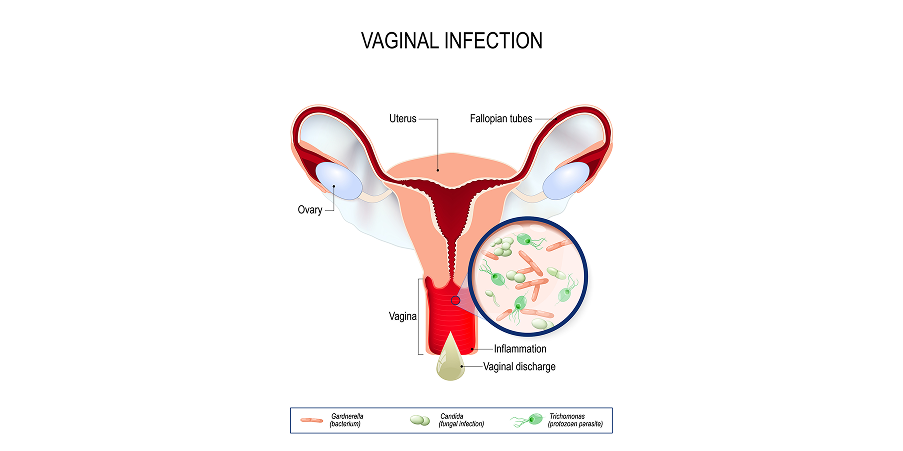 Vaginitis Trichomoniasis, Candidiasis, Bacterial Vaginosis_Disease Summary
History and Physical Examination
The Clinical
Presentation section
describes the clinical features associated with vaginal infections.
The History section
discusses the important information to inquire about in patients suspected of
vaginitis, and the Physical Examination section explains the need to perform a
thorough assessment and examination in these patients.
The Screening section
lists indications for screening asymptomatic women for possible vaginitis.
Discussions on human immunodeficiency
virus (HIV) counseling and testing are also in this section.
Chẩn đoán
Discussion on specimen
collection and lab tests in patients evaluated for vaginal discharge depending
on the etiology of vaginitis is in the Laboratory
Tests and Ancillaries section.
Other conditions that should be ruled out in
the diagnosis of vaginitis are listed in the Differential
Diagnosis section.
Xử trí
Evaluation and treatment of sex partners
depending on the etiology of vaginitis are discussed in the Evaluation section.
The Pharmacological
Therapy section discusses in
detail the syndromic and empiric therapy of patients diagnosed with vaginitis.
The Nonpharmacological
section includes things to educate the patient about the management
of vaginitis.
The Monitoring section identifies indications
for follow-up of patients with vaginitis depending on the etiology.


