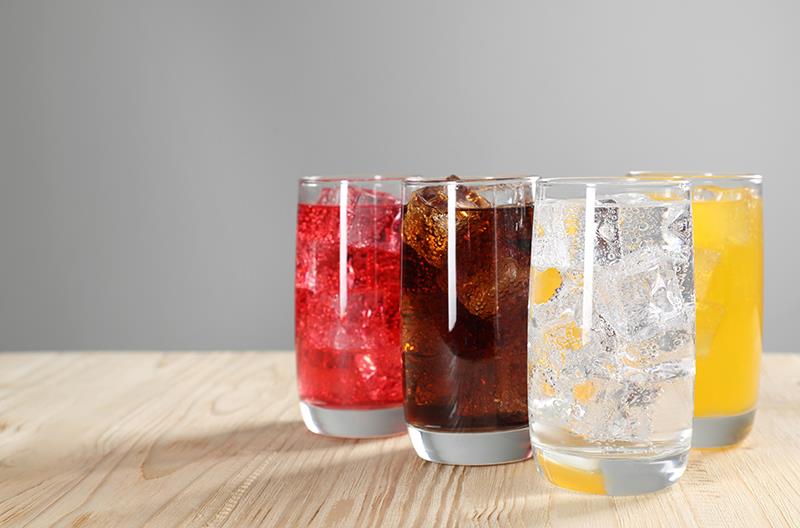
Drinking excessive amounts of sugar sweetened beverages (SSBs) and fruit juice has been shown to raise the risk of hypertension, regardless of overall diet quality and physical activity, in a large prospective study.
Over 25 years of follow-up within the Growing Up Today Study (GUTS) cohort, the risk of hypertension was 52-percent higher among participants who consumed ≥2 servings of SSBs per day than among those who consumed <3 servings per week (hazard ratio [HR], 1.52, 95 percent confidence interval [CI], 1.27–1.83; p<0.001 for trend). [Circulation 2026;doi:10.1161/CIRCULATIONAHA.125.077666]
Similarly, participants who consumed ≥1.5 servings of fruit juice per day had a 35-percent greater risk of hypertension than those with an intake of <1 serving per week (HR, 1.35, 95 percent CI, 1.06–1.71; p=0.018 for trend).
In substitution analyses, replacing 1 serving of SSB per day with milk, water, or whole fruit reduced the risk of hypertension by 13 percent, 9 percent, and 22 percent, respectively. Additionally, consuming whole fruit instead of fruit juice lowered the risk by 19 percent.
“[The findings from] our study, which spans a critical life stage from childhood through to adulthood, support clinical guidelines and public health policies that limit the overconsumption of SSBs and fruit juice to reduce long-term hypertension risk,” according to first study author Dr Michelle Nguyen from the University of Toronto, Ontario, Canada, and co-authors.
“Whole fruit, water, and milk represent suitable alternatives to SSBs and fruit juice and may be encouraged as part of hypertension prevention strategies beginning early in life,” they said.
Not all sugars are created equal
The analyses included 25,749 GUTS participants (55 percent female, 96 percent non-Hispanic White) drawn from two enrolment waves—GUTS 1 (n=16,875; baseline 1996) and GUTS II (n=10,918; baseline 2004)—and followed up prospectively through 2021. The mean age at enrolment was 12 years, and the mean age at end of follow-up was 36 years.
All participants completed validated food frequency questionnaires every 1 to 4 years to provide updated information on lifestyle, health status, and habitual diet. A total of 1,625 participants (6.3 percent) reported a hypertension diagnosis during the follow-up.
Total fructose intake was not associated with the risk of hypertension (highest vs lowest intake quintile: HR, 1.07, 95 percent CI, 0.92–1.25), as was whole fruit consumption (highest vs lowest intake category: HR, 0.79, 95 percent CI, 0.59–1.05).
Nguyen and colleagues explained that the null findings for total fructose and whole fruit could be due to the differing nutrient matrices of fructose-containing food and beverage sources. “SSBs, fruit juice, and whole fruit are the major contributors to total fructose intake, yet these foods differ substantially in their nutrient compositions and metabolic effects.”
SSBs, which are typically composed of high-fructose corn syrup or sucrose, are a major source of fructose in the diet and have been consistently linked to adverse health outcomes. Meanwhile, fruit juice contains lower amounts of dietary fibre, polyphenols, and other nutrients that are lost in processing compared with whole fruit. [Nat Rev Endocrinol 2022;18:205-218; J Clin Nutr 2023;117:160-174; Eur J Epidemiol 2020;35:655-671]
“As liquid sources of fructose, both SSBs and fruit juice share similar metabolic effects,” the authors noted. They pointed out that these drinks have the potential to promote excess weight gain—which is a well-established risk factor for hypertension—since liquid calories are less satiating than solid foods and can lead to an incomplete compensation of energy at subsequent meals.
Additionally, “excessive fructose intake from liquid sources is metabolized in the liver, where it can lead to increased production of uric acid. Elevated uric acid has been shown to result in endothelial dysfunction, contributing to increased blood pressure,” Nguyen and colleagues said.
The authors emphasized the importance of considering the whole food source rather than the nutrient alone, given that different nutrient matrices may lead to distinct effects on health outcomes. “Dietary recommendations should emphasize reducing liquid sources of free sugars while promoting whole fruit consumption rather than the fruit juice form.”