
Laboratory Tests and Ancillaries
Laboratory tests are rarely needed to diagnose seasonal and perennial allergic conjunctivitis. This is usually done for academic or confirmatory purposes.
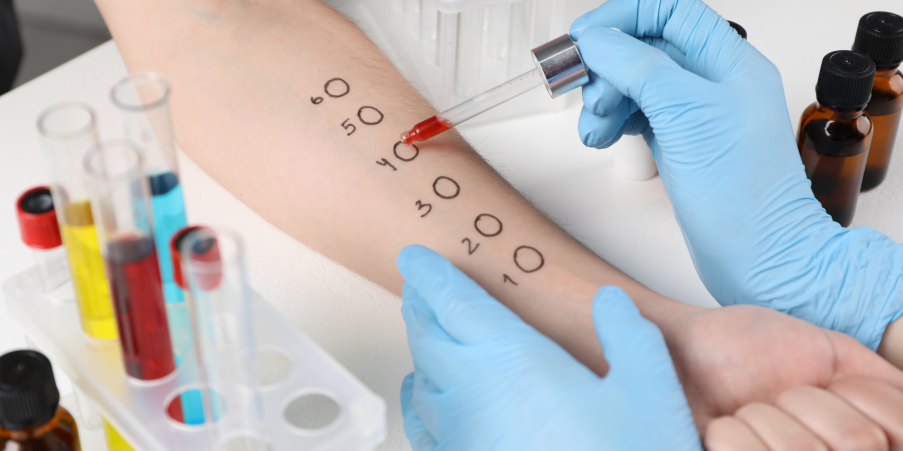
Allergy Skin Testing
 Conjunctivitis - Allergic, Seasonal and Perennial_Diagnostics
Skin prick testing and pollen IgE determination help to identify specific target allergens for immunosuppression. Consider serum-specific IgE measurement if skin testing is not advised (eg patients on antihistamines) or contraindicated, or if the results are inconclusive (eg presence of dermatographism).
Conjunctival Allergen Challenge
Conjunctival allergen challenge is also known as the conjunctival allergen provocation test (CAPT). This is a procedure wherein the conjunctiva is subjected to undergo exposure to increasing levels of a particular antigen (to which the patient previously had a positive skin test) until an ocular reaction is observed. This is used for the determination of ocular hypersensitivity conditions that are IgE-mediated and usually used in studies.
The indications for CAPT include identifying allergens, evaluating inconsistency between history and allergen sensitization, gauging the effectiveness of immunotherapy prior to allergy season, and evaluating drug therapies. The contraindications of CAPT include performing the procedure within the pollen season; use of medication that can affect allergen response; other ocular disorders; ocular surgery in the past 6 months; patients who use contact lenses; pregnant and lactating women; uncontrolled and severe systemic diseases; allergy to medications used during or after CAPT; and ocular disorders that are non-IgE-mediated. The primary results are ocular pruritus (evaluated by the patient) and erythema (evaluated by the physician), while the secondary results (which are not always present in a positive CAPT) are lacrimation, eyelid edema, and conjunctival chemosis.
Conjunctival Scrapings
If conjunctival scrapings are positive for eosinophils, it is strongly suggestive of allergy. A negative scraping is inconclusive.
Cytological Examination of Tear Fluid
Collect a tear sample with a capillary tube, then spread it on a slide and stain it. An allergic response is indicated by the presence of eosinophils, neutrophils, and/or lymphocytes. Tear histamine or tryptase levels can also be measured.
Immunoassay Testing of Tear Fluid
Immunoassay testing of tear fluid measures mast cells' activity by determining the level of tryptase using immunoassay testing. The IgE measured in tears may be used in diagnosing allergic conjunctivitis and in evaluating its severity.