
Overview
Allergic
conjunctivitis is an inflammation of the conjunctiva caused by airborne
allergens, presenting in acute, intermittent, or chronic forms with symptoms
such as itching, excessive tearing, eye discharge, and redness (pink eye), as
stated in the Introduction
section.
The prevalence of allergic conjunctivitis
worldwide is variable, ranging from 6-30%. A detailed discussion about the
prevalence of allergic conjunctivitis is in the Epidemiology
section.
The Pathophysiology section
states that allergic conjunctivitis is a classic type 1 immunoglobulin E
(IgE)-mediated hypersensitivity reaction wherein triggering antigens couple to
reaginic antibodies (IgE) on the cell surface of mast cells and basophils, leading
to the release of histamines resulting in conjunctival injection and swelling. The
developmental process of allergic conjunctivitis in affected patients is in
this section.
Conditions associated with
the development of allergic conjunctivitis are in the Risk Factors section.
The Classification section discusses the differences between
seasonal and perennial allergic conjunctivitis.
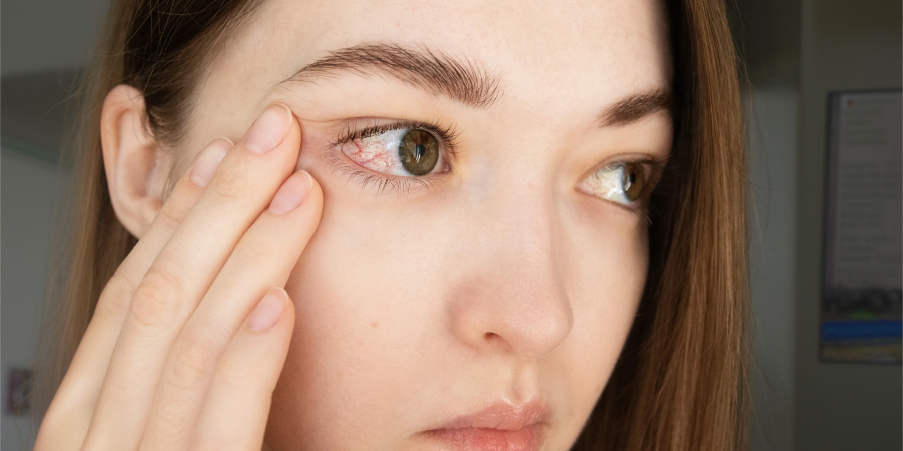 Conjunctivitis - Allergic, Seasonal and Perennial_Disease Summary
History and Physical Examination
The Clinical
Presentation section
describes the signs and symptoms of patients with allergic conjunctivitis.
The History section
enumerates the important information to be gathered in patients with allergic
conjunctivitis, while an explanation of the proper ophthalmologic examination
is in the Physical Examination section.
Diagnosis
Discussions on allergy
skin testing, conjunctival allergen challenge, conjunctival scrapings,
cytological examination, and immunoassay testing of tear fluid in the
evaluation of allergic conjunctivitis are in the Laboratory
Tests and Ancillaries section.
Other conditions that should be ruled out in
the diagnosis of allergic conjunctivitis are listed in the Differential Diagnosis section.
Management
The Pharmacological
Therapy section discusses the different treatment options, such
as lubricants, antihistamines, mast cell stabilizers, and corticosteroids, in
the management of allergic conjunctivitis.
The Nonpharmacological section includes discussions on general eye
care measures and avoidance of trigger factors that are essential in the
treatment of allergic conjunctivitis.
Indications for
surgery as a therapeutic option for patients with allergic conjunctivitis are
in the Surgery section.
The Monitoring section identifies indications
for follow-up and specialist referral in patients with allergic conjunctivitis.